Bob_M
Bob_M
A toolbox seems like one of the simplest purchases in DIY.
It’s just a box for tools, right?
That’s what many homeowners assume—right up until they buy one that’s too small, too flimsy, too heavy to move comfortably, or so poorly organized that every project begins with five minutes of digging for the right screwdriver.
Disclaimer:
Our recommendations are based on extensive experience with and/or knowledge of these products, and we do so not because of the modest commissions we could earn but rather because we believe they are actually beneficial and useful. We are honored to be these tools' affiliates. We might receive commissions from Amazon, and other merchants when you buy something after clicking one of our links. Our affiliate policy is covered in more detail here. If you don't think these things will help you accomplish your goals, please don't spend any money on them.
The truth is, a good toolbox doesn’t just hold tools.
It changes how easy those tools are to use.
It affects how quickly you can start a project, how well you protect the tools you’ve already paid for, and whether your workshop feels organized or permanently one step away from chaos.
The best toolbox for a homeowner also isn’t always the biggest one.
A rolling chest might be perfect for someone with a garage full of power tools, while a compact portable box can be a smarter choice for a basic home tool kit that mostly handles repairs, furniture assembly, and weekend DIY jobs.
That’s why this guide isn’t just a list of random product picks.
We’re going to look at the toolbox styles that actually make sense for different DIY setups, the features that matter in real life, and the mistakes worth avoiding before you spend money on storage that doesn’t fit the way you work.
Because choosing the right toolbox isn’t really about buying a container.
It’s about making the tools you already own easier to find, easier to protect, and much more enjoyable to use.
Why the Right Toolbox Matters More Than Most DIYers Think
Most homeowners don’t start by shopping for a toolbox.
They start by buying a few tools.
A hammer for hanging frames.
A screwdriver set for furniture assembly.
Pliers for a stubborn plumbing fitting.
A drill because at some point, almost everyone gets tired of driving screws by hand.
At first, those tools live wherever there’s space—one in a kitchen drawer, one on a shelf in the garage, one under the sink, another still in the cardboard packaging it came in.
That system works for a while.
Until it doesn’t.
Sooner or later, every DIYer reaches the same frustrating moment: the tool you need is somewhere in the house, but not where you expected it to be. The tape measure vanished. The utility knife is buried under extension cords. The screwdriver you know you own has disappeared into a pile of random hardware, batteries, and half-used wall anchors.
That’s the point where a toolbox stops being “nice to have” and starts becoming part of the project itself.
A good toolbox doesn’t just store tools. It creates readiness.
It means:
- your core tools stay together instead of scattered across rooms
- your tools are less likely to get damaged, dusty, or damp
- small accessories like bits, fasteners, blades, and anchors stop disappearing
- setup time before a project becomes faster and less annoying
- cleanup after a project becomes easier, which also makes you more likely to maintain your tools properly
That last point matters more than it seems.
A homeowner with an organized toolbox is far more likely to wipe down tools after a project, put them back in a dry place, and notice small problems—like rust, loose screws, or cracked handles—before they turn into bigger ones. In other words, good storage quietly supports tool maintenance, not just convenience.
The right toolbox also helps you work in a way that fits your space.
If you live in an apartment or only keep a small repair kit for occasional jobs, a compact portable toolbox may be exactly what you need. If you’re building out a garage workshop with drills, saws, batteries, chargers, and hand tools, that same box will feel cramped almost immediately. And if you move tools around the house or out to the yard often, portability matters far more than drawer count.
That’s why “best toolbox” is a trickier question than it looks.
The best toolbox isn’t the one with the most compartments, the thickest steel, or the biggest discount tag.
It’s the one that matches:
- the number of tools you actually own
- where you store them
- how often you move them
- whether your projects are mostly quick repairs, regular weekend DIY, or full garage-based work
Get that match right, and your toolbox becomes one of the most useful purchases in your entire setup.
Get it wrong, and it turns into one more awkward object taking up space while your tools keep migrating back to random shelves and drawers anyway.
Quick Comparison: The Best Tool Boxes for Different DIY Needs
Not every homeowner needs the same kind of toolbox.
A compact portable box can be perfect for someone who only keeps a basic repair kit, while a rolling setup makes much more sense for a garage DIYer with power tools, batteries, and a growing collection of accessories.
That’s why the smartest way to shop for a toolbox isn’t to ask, “What’s the best toolbox overall?” but rather:
“What’s the best toolbox for the way I actually work?”
Here’s a quick overview of the categories that matter most.
| Best For | Recommended Toolbox Type | Why It Makes Sense |
| Most homeowners overall | Portable toolbox with removable tray | A practical middle ground: easy to carry, enough space for essential hand tools, and simple to store in a closet, utility room, or garage shelf. |
| Apartment DIY / small home repair kits | Compact portable toolbox | Ideal when you only need a core set of tools and don’t want a bulky storage system taking over a small space. |
| Garage DIYers with a growing collection | Rolling toolbox or tool chest | Better for heavier loads, larger tool collections, and projects that involve both hand tools and power tools. |
| DIYers who move tools around often | Portable toolbox with strong handle and latches | Easier to carry between rooms, out to the yard, or to a car without the awkward bulk of a rolling chest. |
| Budget-conscious homeowners | Simple plastic or resin toolbox from a reliable brand | If you mostly store screwdrivers, pliers, a hammer, tape measure, and a drill, you may not need a heavy-duty premium box. |
| Heavy hand-tool or mechanic-style setups | Metal toolbox or drawer-style chest | Better for weight, durability, and long-term organization if your tool collection is large and frequently used. |
| People constantly losing bits, fasteners, and small parts | Toolbox with organizers or modular small-parts storage | A good toolbox should help you store the little things too—not just the big tools. |
The important thing to notice here is that toolbox size alone doesn’t tell you much.
A large rolling chest can be a fantastic investment for a dedicated workshop, but it can also be ridiculous overkill for someone whose “DIY life” mostly means tightening cabinet hardware, hanging shelves, and doing the occasional furniture repair.
On the other hand, a cheap compact toolbox can work beautifully for a light homeowner kit—but become frustrating the moment you add a cordless drill, charger, spare batteries, socket set, and a pile of loose accessories.
That’s why the next step is to look at the actual toolbox styles in more detail and match them to the kind of DIY setup you have now—not the fantasy version of your future workshop.
Our Best Tool Box Picks
Best Overall Tool Box for Most Homeowners
Stanley 23-Inch Structural Toolbox

- Waterproof design, large interior compartment, and removable tray.
- Lightweight, durable, and affordable.

If you only buy one traditional toolbox for general home DIY, this is the kind of product that makes the most sense for most people.
The Stanley 23-Inch Structural Toolbox hits a very practical middle ground: it’s large enough to hold a real homeowner toolkit, portable enough to move around the house or garage without much trouble, and simple enough that you don’t have to build your entire storage system around it.
That balance matters.
A lot of homeowners don’t need a giant rolling chest, but they also outgrow tiny starter boxes surprisingly quickly. Once you add a hammer, a full screwdriver set, pliers, measuring tools, utility knives, fasteners, drill accessories, and maybe even a compact cordless drill, a small toolbox starts feeling cramped fast. The Stanley sits in that much more useful “real toolkit” zone.
Why it stands out
- roomy enough for a serious home repair and DIY kit
- sturdy structural design that feels more substantial than bargain plastic boxes
- removable tray helps separate smaller tools and accessories from bulkier items below
- good fit for homeowners who want one main toolbox instead of multiple tiny storage pieces
Best for
Homeowners who want a dependable all-purpose toolbox for everyday DIY, repairs, and small to medium projects without stepping into rolling chest territory.
What to keep in mind
This is still a traditional portable toolbox, not a modular storage system. If your setup is growing into multiple power tools, chargers, batteries, and specialized accessories, you may eventually want something with drawers, stackable modules, or rolling storage. But for a broad “one toolbox does most of it” use case, this is one of the strongest styles to start with.
Best Compact Tool Box for Basic Home Repair Kits
Craftsman 16-Inch Plastic Toolbox
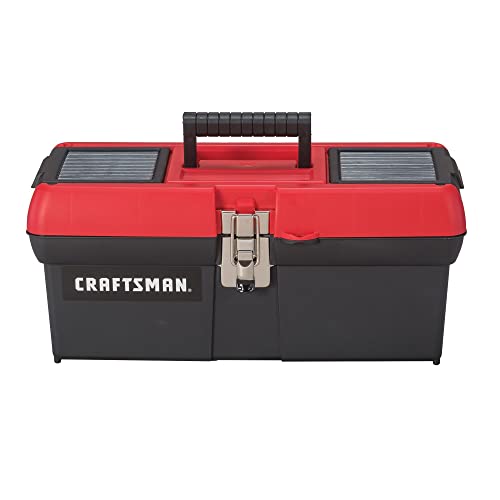
- CRAFTSMAN brand gives you more tools for your money
- Tray for small items
- Comfort-grip handle
- Lockable
- Ugly appearance
- Made of plastic (instead of metal)
- Material: Plastic, Metal
- Size: 15.8"L x 8.2"W x 7.1"H
- Design: 16-inch
- Tool Box Lock: Pad lock eye
- Water Resistance: No
- Color: black
Not every homeowner needs a large toolbox.
If your DIY life is still fairly light—think furniture assembly, picture hanging, tightening hardware, opening access panels, fixing the occasional loose hinge, or keeping a small set of repair tools in an apartment or utility closet—a compact toolbox can actually be the smarter choice.
That’s where the Craftsman 16-Inch Plastic Toolbox makes sense.
It won’t replace a full garage storage setup, and it’s not pretending to. Its value is that it gives a small home repair kit a proper home without wasting space or pushing you toward a larger box you simply don’t need yet.
Why it stands out
- compact size works well for apartments, small homes, laundry-room storage, or “just the essentials” repair kits
- easy to grab quickly for basic tasks around the house
- more practical than tossing a hammer, pliers, and screwdrivers into a random drawer
- good fit for homeowners who are still building their tool collection slowly
Best for
Beginners, apartment DIYers, and homeowners who mainly need a compact toolbox for basic repair tools rather than a full workshop setup.
What to keep in mind
This is not the toolbox to buy if you already own a drill, larger hand-tool sets, socket sets, or multiple measuring tools. It’s best when you’re intentionally keeping the toolkit small and simple. If your collection is growing, you’ll outgrow this one much faster than the Stanley or a modular system.
Best Modular Toolbox for a Growing DIY Kit
DEWALT TSTAK Deep Box

- Sturdy plastic build, deep interior, and interlocking capability with TSTAK modules.
- Highly durable, stackable, and affordable.
There’s a point in DIY where a standard toolbox starts feeling a little too limiting, but a rolling chest still feels excessive.
That’s exactly the space the DEWALT TSTAK Deep Box fills.
This is the kind of storage option that makes sense when your tool collection is starting to expand beyond a simple repair kit. Maybe you now own a cordless drill, spare batteries, chargers, bits, hole saws, measuring tools, and a few specialty items for recurring projects. You still want portability, but you also want a system that can grow with you instead of forcing everything into one open bin.
That’s what makes the TSTAK format useful. It gives you a more organized, modular path forward without requiring a full workshop cabinet or oversized rolling chest on day one.
Why it stands out
- better fit for expanding DIY kits than a basic open toolbox
- modular format makes it easier to grow storage gradually instead of replacing everything at once
- deep storage area works well for a mix of hand tools, drill accessories, batteries, and project gear
- useful bridge between “starter toolbox” and “full garage storage system”
Best for
Homeowners whose tool collection is growing beyond the basics and who want a storage solution that can evolve with more tools, more accessories, and more project types.
What to keep in mind
This isn’t the most traditional “grab-and-go” toolbox on the list, and if you only own a few essential tools it may be more storage system than you need right now. Its real strength appears when your DIY setup is starting to grow and you want something more flexible than a single fixed toolbox.
Best Tool Chest for Garage DIYers
Craftsman 5-Drawer Tool Chest / Cabinet

- Five spacious drawers with ball-bearing slides for smooth operation.
- Pegboard side panel for hanging frequently used tools.
- Heavy-duty steel construction with a sleek red and black finish.
- Built-in tool holder for quick and convenient access.
- Locking mechanism for secure tool storage.
Once your DIY setup lives primarily in the garage or workshop, the storage conversation changes.
At that point, portability often matters less than organization, access, and capacity. You’re no longer just storing a hammer, pliers, and a tape measure—you may be working with multiple screwdrivers, socket sets, fasteners, drill accessories, measuring tools, blades, safety gear, and small project supplies that become frustrating to manage in a single open toolbox.
That’s where a drawer-style tool chest starts making a lot more sense.
The Craftsman 5-Drawer Tool Chest is a strong fit for homeowners who want their tools organized by category instead of stacked in layers. Drawers make it easier to separate frequently used hand tools, measuring tools, bits, and hardware, which means less digging and less time wasted during projects.
Why it stands out
- drawers are far better than a single open cavity when your tool collection is growing
- works well for garage-based DIY where tools stay mostly in one place
- makes it easier to separate hand tools, accessories, and small parts into logical groups
- a better fit than a portable toolbox once you’ve moved into “home workshop” territory
Best for
Homeowners with a dedicated garage or workshop area who want more organized access to a growing tool collection and don’t need to carry everything around the house.
What to keep in mind
This is a storage-and-organization choice, not a portable household toolbox. If you frequently carry tools from room to room, out to the yard, or between locations, a portable or rolling box may be more practical. This is best for people whose tools mostly live in one work zone.
Best Rolling Toolbox for Home DIYers
DEWALT TSTAK Mobile Storage Box
- TSTAK-compatible
- Modular storage system
- Comes with wheels for easy transport
- Modular tool storage system
- Handle reaches high enough for most users
- Latches could be sturdier
- This tool box is a bit bulky and heavy
- Design Pattern: Solid
- Weight: 4.88 pounds
- Size (inches): 20.13 x 17 x 39
- Durable 7-inch wheels
- Style: Deep Box

If you move tools around often—but don’t want to jump straight into a premium modular system like Milwaukee PACKOUT—the DEWALT TSTAK Mobile Storage Box makes a lot of sense.
This is one of those products that becomes more appealing the moment your projects stop happening in one place. Maybe you’re carrying tools between the garage and backyard, moving them around the house during a renovation, or simply tired of lifting a heavy loaded toolbox every time you need your drill, fasteners, and hand tools in a different room.
Wheels change that equation quickly.
The TSTAK mobile format also works well for homeowners who like the idea of modular storage but want to enter that world a little more gradually. It gives you mobility and expansion potential without immediately committing to a larger, more expensive system.
Why it stands out
- easier on the back and shoulders than carrying a heavy toolbox once your kit grows
- useful for homeowners who work across the garage, driveway, yard, and interior rooms
- more approachable than a full workshop chest for people who still want a mobile DIY setup
- works well as the rolling foundation of a modular storage system
Best for
DIYers who regularly move tools around the house or property and want a more mobile setup than a traditional portable toolbox can provide.
What to keep in mind
Rolling storage is incredibly convenient once your tool collection gets heavier, but it also takes up more space and makes less sense if you only own a basic compact repair kit. If your DIY setup is still minimal, a simpler portable toolbox may be the better value.
Milwaukee PACKOUT Rolling Modular Toolbox

The Milwaukee PACKOUT system is what happens when your “toolbox” stops being a box and starts becoming an entire storage ecosystem.
For homeowners who are heavily invested in DIY, own multiple power tools, and want a serious long-term storage system that can expand with the collection, PACKOUT is one of the most compelling options in this category. It’s especially appealing if you’re already beyond basic homeowner repairs and doing larger renovation, workshop, or garage-based projects with a mix of hand tools, batteries, chargers, blades, accessories, and job-specific gear.
Its biggest advantage isn’t just durability—it’s system thinking.
Instead of treating storage as one container that eventually gets overstuffed, PACKOUT lets you build a setup around how you actually work: larger tools in one module, hand tools in another, fasteners and accessories in another, and rolling mobility underneath.
Why it stands out
- excellent for larger DIY setups that have outgrown traditional toolboxes
- modular system makes organization much easier as your collection expands
- rolling base adds mobility without forcing you to carry a very heavy load
- one of the strongest choices for homeowners who want a premium long-term storage platform
Best for
Serious DIYers, garage renovators, and homeowners with a growing collection of hand tools, power tools, batteries, and accessories who want a modular storage system they can build on over time.
What to keep in mind
PACKOUT is not the “best toolbox for everyone.” It’s one of the best premium systems for the right user. If your DIY setup is still small, or you only need a basic household repair box, this is probably more system—and more cost—than you need right now.
Portable vs Rolling vs Stationary Tool Boxes: Which One Fits Your DIY Setup?
One of the easiest ways to waste money on tool storage is to buy the right product quality in the wrong toolbox category.
A well-built rolling box can still be a bad purchase if you only own a basic repair kit and have nowhere practical to store it. A sturdy portable toolbox can also become frustrating fast if your tool collection has already expanded into drills, chargers, socket sets, fasteners, and specialized accessories that all need their own place.
That’s why choosing a toolbox should start with how and where you actually work, not just which model has the best reviews.
Portable tool boxes: best for basic to moderate home DIY
Portable toolboxes are the classic choice for a reason. They’re simple, compact enough to move easily, and practical for homeowners who want one main place to keep their essential tools.
A portable toolbox usually makes the most sense if:
- your tool collection is still fairly compact
- you carry tools from room to room for repairs and small projects
- you don’t have a dedicated workshop or garage storage wall yet
- you want something easy to tuck onto a shelf, into a closet, or under a workbench
For many homeowners, this is the sweet spot. A good portable toolbox can hold a hammer, screwdrivers, pliers, utility knife, measuring tools, a few fasteners, and sometimes even a compact drill—without turning storage into a whole separate project.
Portable boxes are often the best fit for:
- apartment DIYers
- new homeowners building a first toolkit
- people who mostly handle repairs, furniture assembly, wall mounting, and small weekend jobs
- anyone who wants a simple all-purpose toolbox without committing to a larger system
The limitation is capacity. Once your toolkit grows beyond the basics, a traditional portable box can start to feel crowded—especially if you’re trying to store batteries, chargers, bits, accessories, and bulkier tools in the same space.
Rolling tool boxes: best for heavier kits and multi-zone DIY work
Rolling toolboxes become useful when your tools get too heavy—or too numerous—to carry comfortably.
If you’ve ever loaded a toolbox with a drill, charger, socket set, pliers, fasteners, tape measure, blades, safety gear, and a few random project supplies, you already know how quickly “portable” can stop feeling portable.
That’s where rolling storage starts to make sense.
A rolling toolbox is a strong option if:
- your toolkit is heavy enough to be annoying to carry
- you move tools between the garage, driveway, backyard, and inside the house
- you’re doing renovation, workshop, or repeat DIY projects often enough that mobility matters
- you want storage that can grow into a modular system over time
For a homeowner with a growing tool collection, a rolling setup can be much more comfortable than lifting a loaded toolbox every time a project moves to a different room. It also tends to work well when you own both hand tools and power tools, since the added capacity makes it easier to store larger items and accessories together.
The tradeoff is bulk. Rolling storage takes up more space, isn’t as convenient for quick “grab one screwdriver and go” tasks, and can feel excessive if your DIY life is still relatively light.
Stationary tool chests and cabinets: best for garage-based workshops
Stationary drawer-style tool chests, cabinets, and workbench-style storage are less about portability and more about organization, access, and capacity.
They make the most sense when your tools mostly live in one place—usually a garage, workshop, or dedicated DIY corner—and you’ve reached the point where a single open toolbox just isn’t an efficient way to store everything anymore.
A stationary tool chest is often the better choice if:
- your tools stay mostly in the garage or workshop
- you want to organize tools by type rather than stacking them in one main compartment
- you own a larger hand-tool collection, multiple measuring tools, bits, sockets, blades, and hardware
- you’re tired of digging through layers of tools to find what you need
This kind of storage is especially useful for homeowners who are gradually building a proper home workshop. Drawers make it easier to separate categories—pliers in one drawer, screwdrivers in another, measuring tools in another, drill accessories and bits in another—so projects feel faster and less chaotic.
The downside is obvious: it doesn’t travel well. If your tools need to move constantly around the house, a stationary chest won’t replace the convenience of a portable or rolling box.
A simple way to choose the right category
If you’re still not sure which toolbox style fits you best, use this shortcut:
Choose a portable toolbox if…
- your kit is still fairly small to medium
- you mainly do home repairs and occasional DIY projects
- you need something easy to carry and easy to store
- you don’t yet need a full modular or garage-based system
Choose a rolling toolbox if…
- your kit is getting heavy
- you move tools across multiple work areas
- you want a mobile system that can grow with your projects
- you already own both hand tools and power tools and need more capacity
Choose a stationary tool chest or cabinet if…
- your tools mostly stay in one workshop or garage area
- your collection has outgrown a single open box
- you care more about organized access than portability
- you want tools sorted by category instead of stacked together
The best toolbox isn’t really about size or brand first.
It’s about matching the storage style to the way your DIY projects actually happen. Once you get that part right, choosing between specific products becomes much easier.
What to Look for Before Buying a Tool Box
A toolbox can look perfect online and still be the wrong fit the moment you start loading it with your actual tools.
That’s why the smartest way to shop isn’t to focus on brand names or the number of compartments first. It’s to think about what you own, where you use it, and how you want to access it during a project.
Here are the five things that matter most.
1. Buy for the tool collection you actually own
The easiest mistake is buying for an imaginary future workshop instead of your current setup.
If your kit is still fairly simple—a hammer, screwdrivers, pliers, tape measure, utility knife, and maybe a drill—you probably don’t need a giant rolling chest. But if you already own power tools, batteries, chargers, drill bits, fasteners, and measuring tools, a tiny compact box will get crowded very quickly.
The sweet spot is usually a toolbox that fits your current collection plus a little room to grow, without forcing you into oversized storage you won’t use properly.
2. Think about where the toolbox will live
A toolbox that works well in a garage workshop can be awkward in an apartment, utility closet, or crowded laundry room.
If your tools need to stay compact and easy to grab for quick household repairs, a portable toolbox usually makes the most sense. If your tools mostly live in the garage and support regular DIY projects, a larger rolling box or drawer-style chest may be a better long-term fit.
Before buying, ask:
- Will I carry this around the house often?
- Will it stay mostly in one garage or workshop area?
- Do I actually have space for a rolling box or chest?
3. Choose the right storage style—not just the right size
Capacity matters, but layout matters almost as much.
A traditional portable toolbox is simple and practical, but it can become messy once the tool collection grows. Drawer-style storage makes it easier to separate categories of tools, while modular systems work well when you want to keep power tool accessories, batteries, and small hardware from mixing with everything else.
As a quick rule:
- portable toolbox = best for basic to moderate home DIY
- rolling toolbox = better for heavier mobile kits
- tool chest or cabinet = better for garage-based organization
- modular system = best when your collection is expanding and needs more structure
4. Don’t underestimate loaded weight
A toolbox may feel fine when empty, but the real question is how it feels once you add actual tools.
A drill, charger, batteries, hammer, pliers, wrench, fasteners, and measuring tools add weight fast. If you’ll be moving that box around often, portability matters just as much as capacity.
This is usually the point where homeowners realize they should have chosen either:
- a lighter portable box with a more realistic load, or
- a rolling option that saves them from carrying a heavy toolbox everywhere
5. Pay attention to the parts you’ll use every time
The most important parts of a toolbox are often the least glamorous ones:
- the handle
- the latches
- the hinges
- the drawer action
- the way small tools and accessories are actually organized inside
A toolbox doesn’t need to be indestructible for homeowner use. But it should feel sturdy, easy to open, and practical enough that you won’t dread using it once it’s fully loaded.
In the end, the best toolbox isn’t the one with the biggest dimensions or the flashiest design.
It’s the one that fits your tools, your storage space, and the way you actually do DIY—so your gear stays easier to find, easier to protect, and easier to use whenever the next project shows up.
Frequently Asked Questions About Tool Boxes for Homeowners
What size toolbox do I need for home use?
That depends less on your house size and more on the number and type of tools you actually own.
If your kit is still fairly basic—say a hammer, screwdrivers, pliers, tape measure, utility knife, and a few small accessories—a compact or mid-size portable toolbox is usually enough. If you also own a drill, batteries, chargers, socket sets, measuring tools, and project supplies, you’ll probably want a larger portable box, a modular system, or even a rolling storage option.
As a general rule, buy for your current tool collection plus a little room to grow, not for an imaginary future workshop that may never happen.
Is a rolling toolbox worth it for homeowners?
Yes—if your toolkit is heavy enough or mobile enough to justify it.
A rolling toolbox makes a lot of sense when:
- you already own both hand tools and power tools
- you move tools between the garage, yard, driveway, and different rooms in the house
- carrying a loaded toolbox has started becoming annoying
If your setup is still small and mostly used for occasional repairs, a rolling box may be unnecessary. But once your tools become heavier and more numerous, wheels can make a very noticeable difference in convenience.
What’s better for DIY: a portable toolbox or a tool chest?
Neither is automatically better—it depends on how and where you work.
A portable toolbox is usually the better choice if:
- you carry tools around the house often
- you don’t have a dedicated garage or workshop
- your tool collection is still relatively compact
A tool chest or drawer-style cabinet makes more sense if:
- your tools mostly stay in one garage or workshop area
- you want better organization by category
- your collection has outgrown a single open toolbox
For many homeowners, the portable toolbox comes first. A tool chest becomes useful once DIY starts turning into a more permanent garage-based setup.
Are plastic toolboxes durable enough?
For many homeowners, yes.
A well-made plastic or resin toolbox is often more than durable enough for normal home DIY use, especially if you mainly store hand tools, measuring tools, and occasional power tool accessories. Plastic toolboxes also tend to be lighter and easier to carry than metal ones.
Metal toolboxes can still be a great choice in some situations—especially for hand-tool-heavy setups or people who prefer a more traditional heavy-duty feel—but for general homeowner use, plastic is not automatically a compromise.
What matters more is the overall build quality of the toolbox, including the handle, latches, hinges, and how well it holds up once loaded.
Can one toolbox hold both hand tools and power tools?
Sometimes, yes—but it depends on the size of the toolbox and the size of your collection.
A larger portable box or modular storage unit can often handle a combination of:
- basic hand tools
- a cordless drill
- batteries and charger
- drill bits and driver bits
- a few measuring tools and accessories
The problem comes when the collection keeps growing. Once you start adding multiple power tools, spare batteries, chargers, fasteners, blades, and project-specific gear, one toolbox can get crowded very quickly.
That’s usually the point where homeowners move toward either:
- a larger rolling toolbox
- a modular storage system
- or a garage chest plus a smaller portable box for everyday tools
What’s the best toolbox for a small apartment or condo?
In most cases, a compact portable toolbox is the smartest choice.
If you live in a smaller space, you usually want something that:
- stores the core tools you actually use
- fits on a shelf, in a closet, or in a utility cabinet
- doesn’t take up floor space like a rolling chest
- is easy to grab for quick repairs without feeling bulky
For apartment DIY, the goal isn’t to build a giant workshop-in-a-box. It’s to keep a reliable, well-organized repair kit that handles the most common household jobs without cluttering your living space.
Is a modular toolbox system worth it for home DIY?
It can be—but usually not for everyone right away.
Modular systems are most useful when your tool collection is clearly growing beyond a simple household repair kit. They work especially well if you own multiple power tools, accessories, batteries, chargers, and project-specific gear that no longer fits comfortably in a single traditional toolbox.
For a homeowner who’s becoming more serious about DIY, modular storage can be a smart long-term investment because it grows with the collection and often makes organization much easier.
For a basic starter toolkit, though, it’s often more storage system than you actually need.
How many toolboxes does a homeowner really need?
Often, just one good toolbox to start.
For many homeowners, a single well-chosen toolbox can cover the essentials for years—especially if it matches the size of the current tool collection and leaves a bit of room to grow.
Over time, though, it’s common to end up with a two-layer system:
- one main toolbox or chest for the bulk of the collection
- one smaller portable box, bag, or organizer for frequently used tools or quick repairs
That setup often works better than trying to force every tool, bit, battery, and accessory into one overloaded box forever.
Final Verdict: Which Tool Box Should You Buy?
The best tool box for a homeowner isn’t the biggest one, the most expensive one, or the one with the most dramatic product photos.
It’s the one that fits the way your DIY life actually works.
If your projects are still mostly home repairs, furniture assembly, wall mounting, and occasional weekend fixes, a solid portable toolbox is usually the smartest place to start. If your collection is growing into drills, batteries, chargers, accessories, and repeat DIY projects, a modular or rolling setup can make a lot more sense. And if your tools mostly live in a garage workshop, a drawer-style chest may be far more useful than trying to force everything into one portable box.
Here’s the simplest way to think about the picks in this guide.
Choose the Stanley 23-Inch Structural Toolbox if…
you want the best all-around toolbox for a normal homeowner DIY setup.
This is the pick for people who want one dependable, practical box for a real home toolkit—something that can hold the essentials without feeling tiny, but also doesn’t push you into oversized rolling storage before you actually need it.
Choose the Craftsman 16-Inch Plastic Toolbox if…
you want a compact toolbox for a small home repair kit, apartment setup, or beginner-level collection.
If your goal is to keep a hammer, screwdrivers, pliers, measuring tape, utility knife, and a few basic repair supplies organized without taking over valuable space, this kind of compact box makes a lot of sense.
Choose the DEWALT TSTAK Deep Box if…
your tool collection is growing and you want something more flexible than a standard portable toolbox.
This is a strong middle-ground option for homeowners who are starting to outgrow a simple repair box but aren’t ready for a large rolling system or garage chest. It’s especially useful when power tool accessories, batteries, and project gear are becoming part of your normal DIY workflow.
Choose the Craftsman 5-Drawer Tool Chest if…
your tools mostly live in a garage or workshop and you want better organization rather than simple portability.
Once your collection gets large enough that you’re constantly digging through one main box, drawers become a major upgrade. This is the better fit for homeowners who want tools sorted by category and ready to access in one dedicated work zone.
Choose the DEWALT TSTAK Mobile Storage Box if…
your toolkit is getting heavier and you regularly move tools between work areas.
If you’re tired of carrying a loaded toolbox from the garage to the house, to the yard, and back again, a rolling option can be a very smart upgrade. This one makes the most sense for homeowners who need mobility without jumping straight into a larger premium system.
Choose the Milwaukee PACKOUT Rolling Modular Toolbox if…
you’re building a serious long-term DIY setup and want a premium storage system that can expand with it.
This is the choice for homeowners who already know they’re beyond the “basic toolbox” stage. If you own multiple power tools, want modular organization, and plan to keep building your collection over time, PACKOUT is one of the strongest long-term systems in this category.
The bottom line
For most homeowners, the smartest first question isn’t “What’s the best toolbox?”
It’s:
“What kind of storage actually fits the tools I own, the space I have, and the way I do DIY?”
Answer that honestly, and choosing the right toolbox becomes much easier.
Get it right, and a toolbox stops being just a place to throw tools.
It becomes part of the system that makes your projects faster to start, easier to manage, and much less frustrating every time something needs fixing.