Bob_M
Bob_M
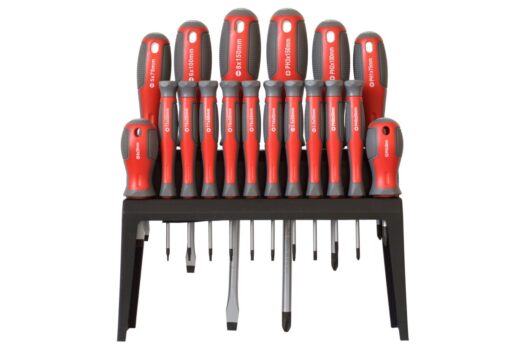
There are usually two moments when people start learning about screwdrivers.
The first happens when they buy their first toolbox.
The second happens when they accidentally strip a screw and spend the next twenty minutes wondering how something so small became such a big problem.
Disclaimer:
Our recommendations are based on extensive experience with and/or knowledge of these products, and we do so not because of the modest commissions we could earn but rather because we believe they are actually beneficial and useful. We are honored to be these tools' affiliates. We might receive commissions from Amazon, and other merchants when you buy something after clicking one of our links. Our affiliate policy is covered in more detail here. If you don't think these things will help you accomplish your goals, please don't spend any money on them.
The second lesson is usually more memorable.
At first glance, screwdrivers seem incredibly simple.
A handle.
A metal shaft.
A tip that fits into a screw.
What could possibly be complicated about that?
Quite a lot, as it turns out.
Most homeowners discover this the first time they encounter a screw that doesn’t match the screwdriver they’re holding.
Suddenly, the screw won’t turn properly.
The screwdriver slips.
The screw head becomes damaged.
Frustration levels begin rising.
And before long, a five-minute task somehow turns into a thirty-minute adventure.
The funny thing is that screwdrivers are among the most frequently used tools in any home.
They’re used for:
- Furniture assembly
- Home repairs
- Cabinet hardware
- Electronics
- Appliances
- DIY projects of every kind
Yet many people own only one or two screwdrivers and hope for the best.
That’s a bit like owning one shoe and expecting it to work for every activity from hiking to ballroom dancing.
Technically possible.
Not ideal.
The good news is that building a practical screwdriver collection doesn’t require dozens of tools or a large budget.
In fact, most homeowners can handle the vast majority of projects with a surprisingly small selection of quality screwdrivers.
In this guide, we’ll explore the most common screwdriver types, how to choose the right ones for your projects, mistakes to avoid, and how to build a screwdriver collection that actually makes life easier.
Because while screwdrivers may not be the most exciting tools in the workshop, they’re often the difference between a smooth project and a long afternoon filled with words that shouldn’t be repeated in front of children.
Let’s start with a simple question:
Why do screwdrivers remain one of the most important tools in every home toolkit?
Why Screwdrivers Are More Important Than Most People Realize
If hammers are the loud, attention-grabbing members of the toolbox, screwdrivers are the quiet professionals.
They don’t make much noise.
They don’t look particularly impressive.
They rarely appear in dramatic home renovation television shows.
And yet, they somehow end up involved in countless projects.
Once you start paying attention, it’s difficult not to notice.
Need to tighten a loose cabinet handle?
You’ll probably reach for a screwdriver.
Installing shelves?
A screwdriver will likely make an appearance.
Assembling furniture?
Almost guaranteed.
Replacing batteries in a toy, opening an electronics case, adjusting door hardware, mounting a thermostat, repairing an appliance…
The list goes on.
A good screwdriver collection quietly solves hundreds of small problems around the home.
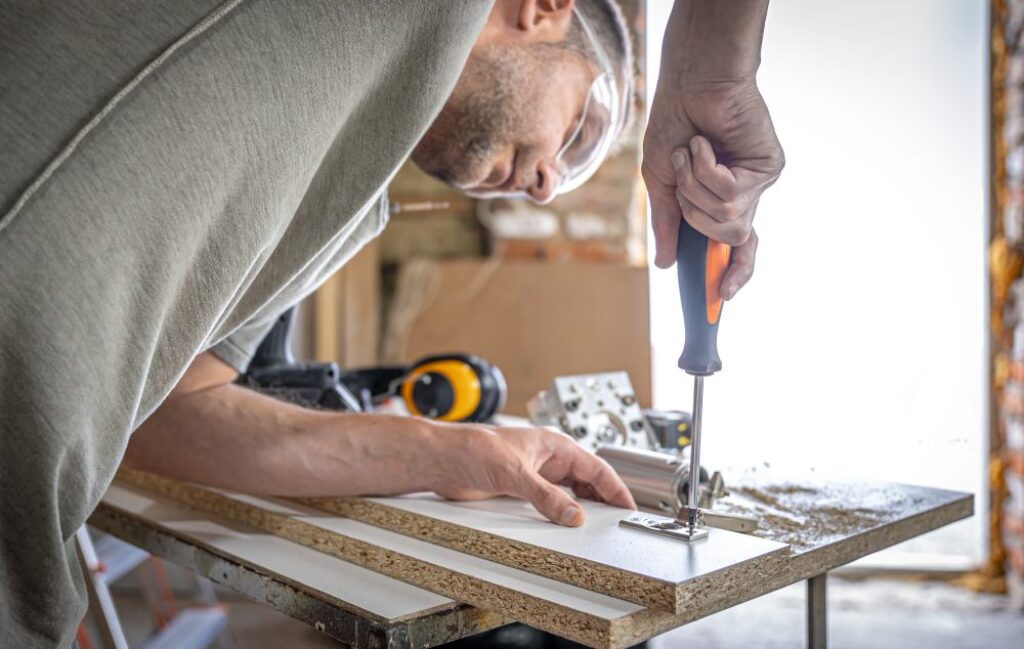
The Tool You Don’t Think About Until You Need It
One of the strange things about screwdrivers is that they often go unnoticed.
People spend hours researching drills, saws, and power tools.
Meanwhile, the humble screwdriver sits quietly in a drawer waiting for its moment.
Then a project appears.
And suddenly it’s the most important tool in the house.
It’s a bit like your internet connection.
You rarely think about it when it’s working.
You think about it constantly when it isn’t.
Modern Homes Are Held Together With Screws
Take a quick look around your home.
You’ll probably find screws almost everywhere.
- Furniture
- Hinges
- Light switches
- Door handles
- Appliances
- Electronics
- Shelving systems
- Wall mounts
Modern life relies heavily on screws because they’re secure, reliable, and easy to remove when repairs or upgrades are needed.
Naturally, that means screwdrivers remain essential.
The relationship is simple.
No screws.
No screwdrivers.
Lots of screws.
Lots of screwdrivers.
And modern homes definitely fall into the second category.
Precision Matters
A hammer rewards confidence.
A screwdriver rewards precision.
With a hammer, you’re delivering force.
With a screwdriver, you’re creating control.
A small difference in size or tip shape can determine whether a screw tightens smoothly or becomes an annoying problem.
This is one reason experienced DIYers often own several different screwdrivers.
Not because they enjoy collecting tools.
Because different screws require different solutions.
Using the wrong screwdriver is one of the fastest ways to damage a screw head.
And once a screw becomes stripped, even simple projects can become surprisingly frustrating.
Small Tool, Big Consequences
Most people underestimate how much time a screwdriver can save.
Or waste.
The right screwdriver:
- Fits properly
- Transfers force efficiently
- Improves control
- Reduces slipping
- Protects screw heads
The wrong screwdriver:
- Slips
- Damages screws
- Scratches surfaces
- Tests your patience
One of those outcomes is clearly preferable.
Why Every Homeowner Needs More Than One
Many beginners start with a single screwdriver.
That’s completely normal.
The problem appears when every screw they encounter is expected to cooperate with that one tool.
Unfortunately, screws didn’t get the memo.
Different screw types were designed for different purposes, industries, and applications.
Which means different screwdriver tips exist for good reasons.
And once you understand the most common types, you’ll stop seeing screwdrivers as a single tool.
You’ll start seeing them as a family of tools, each designed for specific jobs.
That’s exactly where most DIYers take their next step.
Because the real question isn’t whether you need a screwdriver.
The real question is:
Which screwdriver should you be using?
Understanding Screwdriver Anatomy
At first glance, a screwdriver doesn’t seem particularly complicated.
It’s essentially a handle attached to a metal shaft with a shaped tip at the end.
Simple.
Or at least it appears that way.
The interesting part is that small differences in those components can dramatically change how a screwdriver performs.
A quality screwdriver feels comfortable, controlled, and predictable.
A poor one can turn a simple task into an exercise in frustration.
Let’s look at the parts that make the difference.
The Handle
The handle is where comfort begins.
And if you’ve ever spent thirty minutes assembling flat-pack furniture, you already know why comfort matters.
A good handle should provide:
- A secure grip
- Comfortable pressure distribution
- Good control
- Reduced hand fatigue
Many modern screwdrivers use rubberized grips for this reason.
They help prevent slipping and make extended use far more comfortable.
The truth is that you’ll notice a bad handle much faster than you’ll notice a good one.
A good handle simply disappears into the background and lets you focus on the job.
The Shaft
The shaft is the long metal section connecting the handle to the tip.
Its job sounds simple.
Transfer force.
But shaft length can make a huge difference.
Short shafts are excellent for:
- Tight spaces
- Electronics
- Precision work
Long shafts are useful when:
- Screws are recessed
- Access is difficult
- Additional reach is needed
Anyone who has ever tried reaching a screw hidden behind an appliance understands this immediately.
Sometimes an extra few inches makes all the difference.
The Tip
This is where the magic happens.
Or the frustration.
The tip is the part that engages directly with the screw.
And it’s usually responsible for either:
- A smooth repair
- A stripped screw
- A vocabulary test you weren’t planning to take
The most important rule?
The tip must match the screw.
A surprisingly large percentage of screwdriver-related problems occur because the wrong tip is being used.
Not because the tool is bad.
Not because the screw is defective.
Simply because they weren’t designed for each other.
It’s a bit like trying to unlock your front door with your car key.
The effort is there.
The compatibility is not.
Magnetic Tips
Many modern screwdrivers include magnetic tips.
At first, this sounds like a small feature.
Then you drop a tiny screw into a dark corner of the room.
Suddenly it feels like one of humanity’s greatest inventions.
Magnetic tips help:
- Hold screws in place
- Improve control
- Reduce dropped fasteners
- Speed up assembly work
Once people get used to them, they rarely want to go back.
Precision Screwdrivers
Not all screwdrivers are built for construction and home repairs.
Some are designed for delicate work.
Electronics, eyeglasses, watches, small appliances, and hobby projects often require precision screwdrivers.
These tools provide greater control and access to tiny fasteners that standard screwdrivers simply can’t handle.
Trying to repair a laptop with a large construction screwdriver is usually a sign that things are about to go badly.
Why Quality Matters
Here’s a lesson many DIYers learn eventually.
Cheap screwdrivers often look fine on the shelf.
The problems appear later.
Poorly machined tips can:
- Slip more easily
- Wear faster
- Damage screw heads
- Reduce control
A quality screwdriver doesn’t need to be expensive.
It simply needs to fit properly, feel comfortable, and maintain its shape over time.
That’s why experienced DIYers often prefer owning a few good screwdrivers rather than a giant collection of mediocre ones.
Understanding the anatomy helps.
But the real breakthrough comes when you discover that not all screwdriver tips are the same.
In fact, the different types of screwdrivers are where most homeowners realize why a single screwdriver can never do every job.
The Most Common Types of Screwdrivers
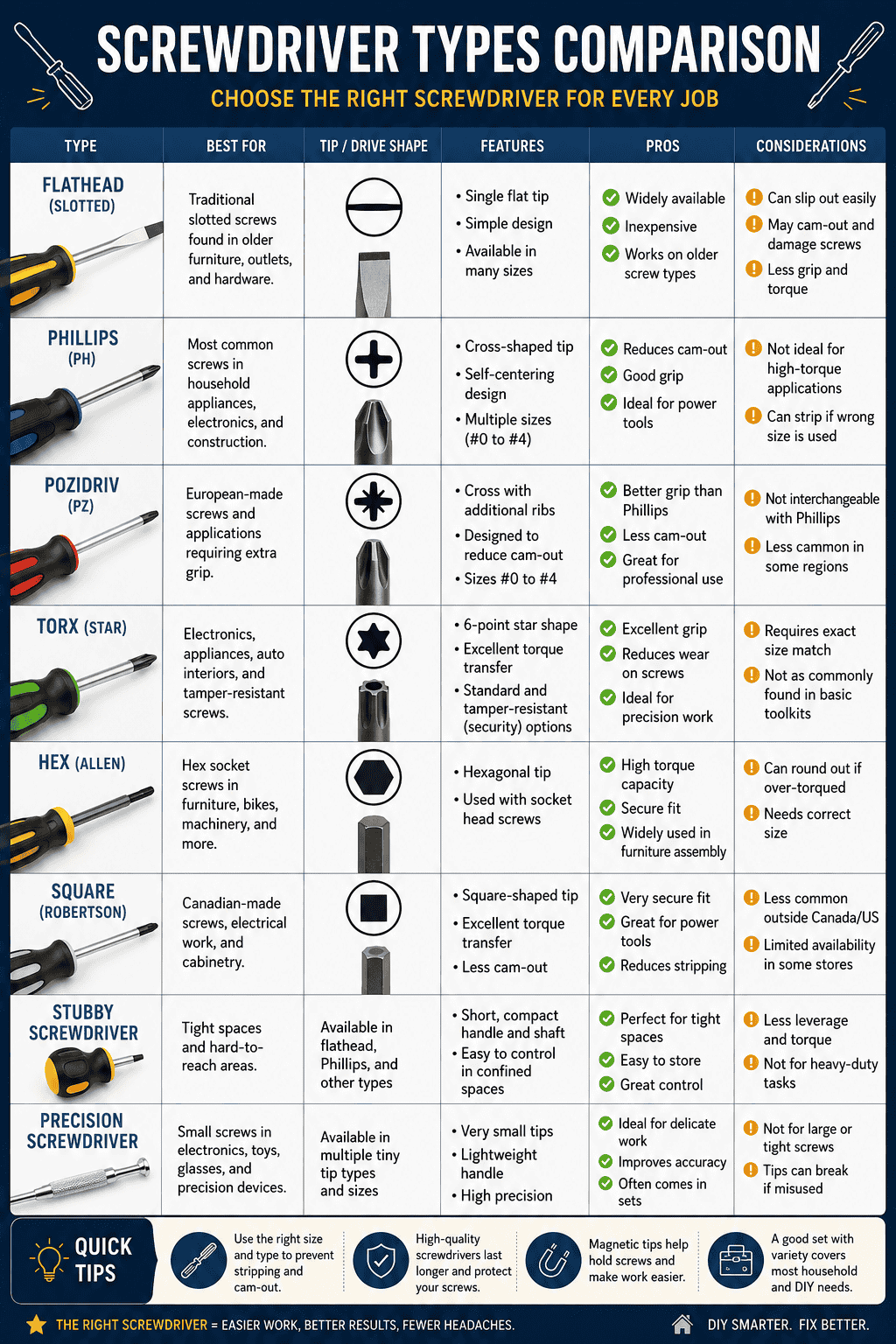
One of the biggest surprises for new DIYers is discovering that screwdrivers aren’t really a single tool.
They’re a family of tools.
And just like family members, some get along with you better than others.
The reason different screwdrivers exist is simple:
Different screws were designed for different purposes.
The challenge is knowing which one belongs where.
Once you understand the major types, you’ll spend less time fighting screws and more time actually finishing projects.
Phillips Screwdrivers
If screwdrivers had a popularity contest, the Phillips screwdriver would probably win.
Recognizable by its cross-shaped tip, it’s one of the most common screwdrivers found in homes around the world.
You’ll encounter Phillips screws in:
- Furniture
- Appliances
- Electronics
- Cabinet hardware
- General household products
The design helps center the screwdriver in the screw, making it easier to drive fasteners compared to older flathead designs.
For most homeowners, Phillips screwdrivers are used more than any other type.
If your toolbox only contained one style of screwdriver, this would probably be the safest choice.
Flathead Screwdrivers
The flathead screwdriver is the old veteran of the group.
Simple.
Reliable.
Still useful after all these years.
Recognizable by its single flat blade, it remains common in:
- Older homes
- Electrical covers
- Vintage hardware
- Certain appliances
Flathead screws may not dominate modern construction, but they aren’t disappearing anytime soon.
One thing worth remembering:
A flathead screwdriver is not a pry bar.
Many have attempted this transformation.
Many screwdrivers have paid the price.
Torx Screwdrivers
Torx screws look a bit like tiny stars.
The first time people encounter one, they often stare at it for a moment and wonder who invented it.
Then they discover how effective it is.
Torx designs provide excellent grip between the screwdriver and screw, reducing slipping and improving torque transfer.
They’re commonly found in:
- Electronics
- Automotive applications
- Power tools
- Outdoor equipment
- Modern hardware
Once you start noticing Torx screws, you’ll realize they’re far more common than you thought.
Robertson Screwdrivers
Also known as square-drive screwdrivers, Robertson drivers are especially popular in woodworking and construction.
Their biggest advantage?
The screw tends to stay attached to the driver.
Anyone who has ever balanced on a ladder while trying to start a screw with one hand immediately appreciates this feature.
Robertson screws offer:
- Strong grip
- Reduced slipping
- Excellent control
Many DIYers become surprisingly loyal to them after using them for the first time.
Hex Screwdrivers
Hex screwdrivers work with hexagonal fasteners and screws.
They’re often found in:
- Furniture kits
- Bicycles
- Exercise equipment
- Machinery
If you’ve ever assembled flat-pack furniture, you’ve probably encountered a tiny hex key and wondered whether the designer secretly disliked humanity.
Fortunately, proper hex drivers make these tasks much easier.
Precision Screwdrivers
These are the specialists.
While standard screwdrivers handle household repairs, precision screwdrivers are designed for delicate work.
Typical uses include:
- Eyeglasses
- Watches
- Laptops
- Smartphones
- Small electronics
Using a standard screwdriver on these tiny screws is often like trying to perform surgery with a shovel.
Technically a tool is involved.
Practically speaking, it’s the wrong one.
A small precision set can be surprisingly useful, even for homeowners who rarely work on electronics.
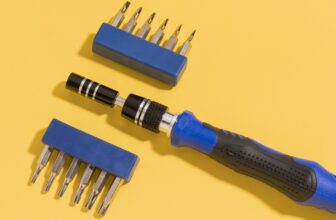
Multi-Bit Screwdrivers
If the Swiss Army knife and a screwdriver had a child, it would probably look like a multi-bit screwdriver.
These tools allow you to swap tips depending on the screw type.
Benefits include:
- Less toolbox clutter
- Greater versatility
- Easier storage
- Cost efficiency
Many homeowners find that a quality multi-bit screwdriver handles a large percentage of everyday tasks.
Which Types Do You Actually Need?
After reading this list, it’s tempting to think you need every screwdriver ever created.
You don’t.
For most homeowners, a practical starter collection includes:
- Phillips screwdrivers
- Flathead screwdrivers
- A multi-bit screwdriver
- A small precision set
That combination covers an impressive range of household projects.
As your skills and interests grow, you’ll naturally discover which additional screwdrivers deserve a place in your toolbox.
The goal isn’t owning every screwdriver.
The goal is never having to stare at a screw and think:
“Well… now what?”
Which brings us to the next question:
If you’re starting from scratch, what does a smart screwdriver collection actually look like?
Building Your First Screwdriver Collection
If you’ve ever searched online for screwdriver recommendations, you’ve probably encountered advice that sounds something like this:
“You need a 48-piece screwdriver set, a precision kit, three specialty drivers, two ratcheting models, and a collection of bits capable of servicing a space station.”
Let’s make life easier.
Most homeowners don’t need a screwdriver museum.
They need a practical collection that solves real problems.
Start With the Jobs You Actually Do
One of the easiest ways to waste money on tools is buying for imaginary projects.
Instead, think about the things you’re most likely to encounter during the next year.
Furniture assembly.
Loose cabinet handles.
Hanging shelves.
Battery replacements.
Appliance repairs.
Basic home maintenance.
Those jobs account for a surprisingly large percentage of what homeowners actually do.
And fortunately, they don’t require dozens of specialized screwdrivers.
The Four-Screwdriver Rule
If someone asked me to build a screwdriver collection from scratch with the smallest possible budget, I’d start with four things:
1. Medium Phillips Screwdriver
This will probably become your most-used screwdriver.
If your toolbox were a football team, this is the player that never leaves the field.
2. Medium Flathead Screwdriver
Older hardware still exists.
Electrical covers still exist.
And somehow flathead screws continue refusing to go extinct.
A good flathead remains essential.
3. Multi-Bit Screwdriver
This is where versatility enters the picture.
Instead of filling a drawer with dozens of screwdrivers, a quality multi-bit driver can cover multiple screw types in a single tool.
It’s often one of the smartest purchases a homeowner can make.
4. Precision Screwdriver Set
At some point you’ll need to:
- Replace a battery
- Tighten eyeglasses
- Open a small electronic device
- Repair a gadget
When that moment arrives, you’ll be very happy you own a precision set.
The Tool Drawer Test
Here’s a simple thought experiment.
Open your toolbox.
Now imagine you could only keep four screwdrivers.
Which four would survive?
Most experienced DIYers end up choosing something surprisingly close to the collection above.
Not because it’s exciting.
Because it works.
When to Expand Your Collection
Additional screwdrivers should solve specific problems.
Not satisfy curiosity.
For example:
- Working on cars? Add Torx drivers.
- Building furniture regularly? Add Robertson drivers.
- Working on machinery? Add Hex drivers.
- Doing electrical work? Consider insulated screwdrivers.
Notice the pattern.
The project creates the need.
The tool follows.
Not the other way around.
The Trap of Giant Tool Sets
Large screwdriver kits look impressive.
And to be fair, some are excellent.
But many homeowners discover they use the same five or six drivers repeatedly while dozens of others sit untouched for years.
This isn’t a criticism of large sets.
It’s simply a reminder that usefulness matters more than quantity.
A small collection of frequently used tools often provides more value than a giant collection gathering dust.
The Collection That Builds Itself
The best screwdriver collections grow naturally.
A project creates a challenge.
The challenge reveals a missing tool.
The missing tool gets added.
Repeat.
A few years later, your collection tells the story of projects completed, mistakes survived, and skills developed.
That’s usually a much better outcome than trying to buy every screwdriver you’ll ever need on day one.
Of course, even the best screwdriver collection can’t prevent one of DIY’s oldest traditions:
Using the wrong screwdriver for the wrong screw.
And that’s where many of the most common frustrations begin.
Common Screwdriver Mistakes (And How to Avoid Them)
Most screwdriver mistakes don’t happen because people lack strength.
They happen because people get impatient.
And screwdrivers have a funny way of punishing impatience almost immediately.
The good news is that nearly every mistake on this list is easy to avoid once you recognize it.
The even better news?
You’re about to learn from someone else’s mistakes instead of making all of them yourself.
Using the Wrong Size Screwdriver
This is probably the most common screwdriver mistake on the planet.
The screw looks close enough.
The screwdriver looks close enough.
Surely it’ll work.
Then the screwdriver slips.
The screw gets damaged.
And suddenly you’re dealing with a problem that didn’t exist thirty seconds earlier.
A screwdriver tip should fit the screw snugly.
Not loosely.
Not “almost.”
Not “good enough.”
Proper fit improves:
- Control
- Torque
- Safety
- Screw longevity
It’s a small detail that makes a surprisingly big difference.
The Stripped Screw Disaster
Every DIYer eventually meets a stripped screw.
Some remember the exact day.
A stripped screw occurs when the recess becomes damaged to the point where the screwdriver can no longer grip effectively.
At this stage, the screw often develops a personality.
A stubborn personality.
The causes are usually:
- Wrong screwdriver size
- Excessive force
- Poor-quality tools
- Attempting to rush the job
The easiest solution?
Prevent it from happening in the first place.
Because removing a stripped screw is significantly less fun than installing one correctly.
Treating a Screwdriver Like a Pry Bar
This mistake is incredibly common.
Need to lift something?
Use a screwdriver.
Need to scrape something?
Use a screwdriver.
Need to pry something open?
Use a screwdriver.
The screwdriver becomes the answer to every problem.
Until the tip bends.
Or breaks.
Or damages the material you’re working on.
Screwdrivers are designed to turn screws.
Everything else is usually asking for trouble.
Using Too Much Force
Many people assume a screw won’t move because they’re not applying enough force.
Often the opposite is true.
Excessive force can:
- Strip screw heads
- Damage materials
- Break fasteners
- Cause slipping
A better approach is usually:
- Use the correct tip
- Maintain steady pressure
- Let the tool do the work
DIY isn’t an arm-wrestling competition.
Most projects reward patience more than strength.
Forgetting to Apply Downward Pressure
Here’s a small technique that solves a surprising number of problems.
While turning a screw, apply firm downward pressure into the screw head.
This helps:
- Maintain contact
- Prevent slipping
- Improve torque transfer
Many beginners focus entirely on turning.
Experienced DIYers focus on turning and maintaining engagement.
That tiny adjustment often changes everything.
Working at an Angle
Screwdrivers are happiest when they stay aligned with the screw.
The more the angle changes, the more likely problems become.
An angled screwdriver can:
- Slip
- Damage the screw
- Damage the surrounding surface
- Reduce control
Whenever possible, keep the shaft aligned with the fastener.
Your screws will thank you.
The “One More Turn” Syndrome
This condition affects DIYers worldwide.
The screw feels tight.
The project is finished.
Everything looks good.
Then a voice appears in your head:
“One more turn.”
The next thing you hear is a crack.
Or a stripped thread.
Or a screw spinning freely.
Congratulations.
The project just became slightly more complicated.
Learning when to stop tightening is one of the most underrated DIY skills.
Losing Tiny Screws
Small screws possess remarkable escape abilities.
Drop one onto the floor and it immediately begins a journey into another dimension.
You hear it land.
You know it landed nearby.
And yet somehow it disappears completely.
Many experienced DIYers work over a tray, towel, or magnetic mat when handling small screws.
This isn’t because they’re overly cautious.
It’s because they’ve suffered before.
The Real Lesson
Most screwdriver mistakes have very little to do with screwdrivers.
They’re usually caused by:
- Rushing
- Impatience
- Using the wrong tool
- Ignoring details
Sound familiar?
Those same mistakes appear in almost every area of DIY.
Fortunately, screwdrivers are forgiving teachers.
Most lessons cost only a little time, a little frustration, and occasionally a replacement screw.
The important thing is learning from them.
And speaking of learning, here’s a question many homeowners ask once they start building their tool collection:
If power tools are so effective, why do experienced DIYers still reach for a manual screwdriver so often?
Why Use a Screwdriver When You Own an Impact Driver?
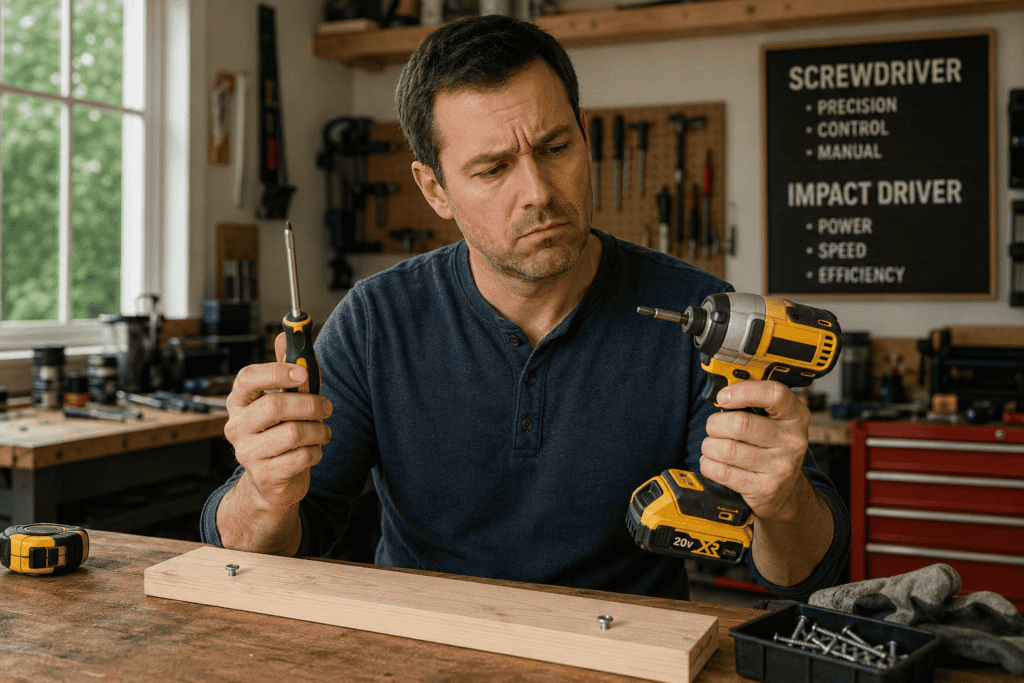
At some point in every DIYer’s journey, a dangerous thought appears.
It usually sounds something like this:
“I have a cordless drill now. Do I even need screwdrivers anymore?”
It’s a fair question.
After all, modern drills and impact drivers are faster, more powerful, and require far less effort.
So why do experienced DIYers still keep screwdrivers within arm’s reach?
Because sometimes the best tool isn’t the most powerful one.
It’s the most appropriate one.
Precision Beats Power
Imagine you’re installing a cabinet handle.
The screw is small.
The material is delicate.
The job takes about ten seconds.
Could you use an impact driver?
Absolutely.
You could also use a chainsaw to cut birthday cake.
The issue isn’t whether it works.
The issue is whether it’s the right choice.
Manual screwdrivers give you something power tools can’t always provide:
Control.
Every movement is deliberate.
Every turn is measured.
Every adjustment can be felt immediately.
For delicate work, that’s often exactly what you want.
When Overtightening Becomes a Problem
Power tools are fantastic at driving screws.
Sometimes they’re a little too fantastic.
Many DIYers have experienced this moment:
The screw feels tight.
The project looks perfect.
You pull the trigger one more time.
Suddenly:
- The screw strips.
- The material cracks.
- The thread fails.
- Regret arrives instantly.
A manual screwdriver naturally limits this risk.
Your hand becomes the clutch.
You feel resistance increasing.
You know exactly when it’s time to stop.
Electronics Don’t Appreciate Impact Drivers
Imagine opening a laptop.
Or replacing a battery in a small electronic device.
Or tightening screws on a pair of eyeglasses.
Now imagine doing that with an impact driver.
The mental image alone should answer the question.
Some jobs require finesse.
Tiny screws and delicate components are rarely impressed by brute force.
This is where manual screwdrivers remain indispensable.
The Five-Minute Rule
Here’s a practical guideline.
If the task takes less than five minutes and involves only a few screws, a manual screwdriver is often faster.
Why?
Because you don’t need to:
- Find the drill
- Find the battery
- Check the charge
- Select a bit
- Adjust settings
You simply grab the screwdriver and start working.
For quick household fixes, simplicity wins surprisingly often.
Tight Spaces Change Everything
Power tools are wonderful until the screw is located in a place that seems specifically designed to annoy human beings.
Behind a pipe.
Inside a cabinet.
Under a sink.
Near a corner.
Suddenly that compact screwdriver looks like a genius invention.
Many homeowners discover that the real challenge isn’t driving screws.
It’s reaching them.
The Feel Factor
This one is difficult to explain until you’ve experienced it.
With a manual screwdriver, you can actually feel the screw.
You feel:
- Resistance
- Alignment
- Thread engagement
- Tightness
It’s almost like having a conversation with the fastener.
A short conversation.
A slightly boring conversation.
But a useful one.
Power tools remove much of that feedback.
That’s often a good thing.
Until it isn’t.
The Best DIYers Use Both
Here’s the secret.
Experienced DIYers don’t choose sides.
They don’t belong to Team Screwdriver or Team Impact Driver.
They use both.
A power tool handles repetitive work, large projects, and efficiency.
A screwdriver handles precision, control, adjustments, and delicate tasks.
It’s not a competition.
It’s a partnership.
And just like a hammer doesn’t replace a wrench, an impact driver doesn’t replace a screwdriver.
Each tool has moments where it shines.
The Real Question
The question isn’t:
“Which tool is better?”
The question is:
“Which tool makes this job easier?”
Once you start thinking that way, tool selection becomes much simpler.
And you’ll probably find yourself reaching for a screwdriver far more often than you expected.
Of course, even with the right screwdriver, there is one problem that eventually visits almost every DIYer.
The stripped screw.
And when that happens, the real challenge begins.
What to Do When a Screw Is Damaged
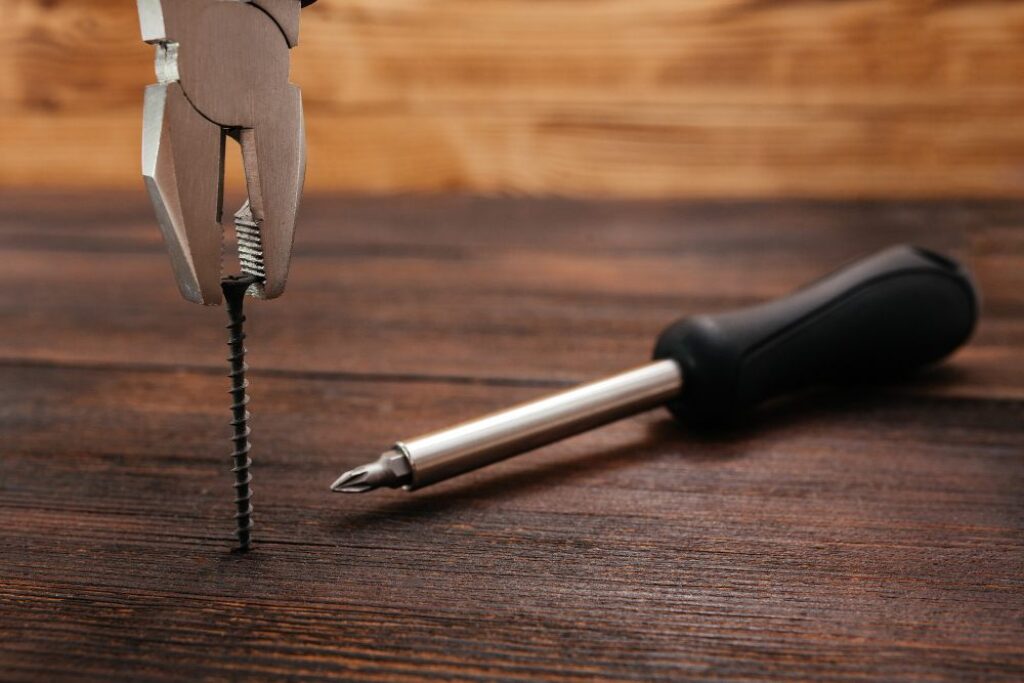
Every DIY project eventually introduces you to a special type of screw.
Not the helpful kind.
Not the cooperative kind.
The kind that seems personally offended by your existence.
The kind that refuses to turn, refuses to loosen, and somehow becomes even more stubborn every time you try.
Welcome to the world of damaged screws.
The good news?
Most damaged screws can be removed.
The bad news?
The easier solution is usually the one you should have tried first.
Let’s look at the most common situations.
The Stripped Screw
This is the classic DIY villain.
The screwdriver slips.
The screw head becomes rounded.
Suddenly there’s nothing left for the driver to grip.
At this point, many people immediately apply more force.
Unfortunately, that usually makes things worse.
A better approach is:
- Stop immediately.
- Use the correct screwdriver size.
- Apply firm downward pressure.
- Try again carefully.
If the damage is already severe, special screw extractors can often save the day.
Think of them as recovery specialists for screws that have made poor life decisions.
The Rusted Screw
Rusted screws are a different challenge.
The screw isn’t necessarily damaged.
It’s simply bonded to the surrounding material by years of corrosion.
This is common on:
- Outdoor furniture
- Garden equipment
- Bicycles
- E-bikes
- Garage hardware
- Exterior fixtures
The first rule?
Don’t force it.
A little patience often works better than brute strength.
Try:
- Penetrating oil
- Allowing time for it to soak
- Gentle back-and-forth movement
Many screws that seem impossible simply need time.
Which is frustrating.
But usually effective.
The Screw That Won’t Budge
Sometimes the screw looks perfect.
The screwdriver fits perfectly.
Nothing appears wrong.
And yet the screw refuses to move.
This is often where frustration takes over.
People begin:
- Pushing harder
- Turning faster
- Inventing new techniques
Most of which make the situation worse.
A smarter approach is to pause and ask:
Why is it stuck?
Common reasons include:
- Thread-locking compounds
- Corrosion
- Paint
- Overtightening
- Cross-threading
Understanding the cause usually leads to the solution.
The Recessed Screw Nightmare
Every homeowner eventually encounters a screw hidden in a location that seems physically impossible to access.
Behind a pipe.
Inside a cabinet.
Under an appliance.
Somewhere clearly designed by a person who never expected future maintenance.
This is where:
- Long-shaft screwdrivers
- Flexible extensions
- Offset drivers
become heroes.
Sometimes the challenge isn’t removing the screw.
It’s reaching it.
The Tiny Screw That Escapes Reality
Let’s discuss one of DIY’s greatest mysteries.
You remove a tiny screw.
It falls.
You hear it hit the floor.
You watch approximately where it lands.
Then it vanishes.
Completely.
Scientists have not yet fully explained this phenomenon.
Many theories exist.
None have been proven.
Experienced DIYers combat this problem by:
- Working over trays
- Using magnetic mats
- Keeping spare screws
- Remaining emotionally prepared for disappointment
When It’s Time to Bring in Reinforcements
Sometimes a screwdriver simply isn’t enough.
That’s okay.
DIY isn’t about proving toughness.
It’s about solving problems efficiently.
Tools that can help include:
- Screw extractors
- Locking pliers
- Penetrating oil
- Heat sources (when appropriate)
- Impact drivers
Knowing when to change strategies is often what separates a frustrating hour from a successful repair.
The Real Lesson
Most damaged screws don’t happen because the screw was bad.
They happen because small mistakes accumulate.
Wrong screwdriver.
Wrong angle.
Too much force.
Too much impatience.
Sound familiar?
That’s because damaged screws teach the same lesson as many DIY projects:
Slow down.
Use the right tool.
Pay attention to the details.
And remember:
The moment you start arguing with a screw, the screw has already won.
Fortunately, with the right tools and techniques, most of these battles can still be won.
The trick is knowing when to stop fighting and start thinking.
When You Need More Than a Screwdriver
A screwdriver is one of the most useful tools you’ll ever own.
But let’s be honest.
Some DIY problems simply don’t care how many screwdrivers you have.
At a certain point, another tool becomes the better solution.
One of the signs that you’re growing as a DIYer is recognizing when it’s time to put the screwdriver down and reach for something else.
The goal isn’t to use a screwdriver for everything.
The goal is to solve the problem efficiently.
When the Screw Isn’t the Problem
Sometimes people assume a screw is causing the issue.
In reality, the problem is something else entirely.
Imagine trying to remove a rusted bracket from a wall.
The screws may come out perfectly.
But the bracket still won’t move.
At that point, you’re dealing with materials, leverage, and force—not screws.
A screwdriver has done its job.
Now another tool needs to step in.
When Force Matters More Than Precision
Screwdrivers excel at control.
Hammers excel at force.
If a project involves:
- Driving nails
- Pulling nails
- Light demolition
- Adjusting framing components
you’ll probably want a hammer nearby.
A screwdriver can help assemble a shelf.
A hammer can help build one.
Related Guide: Complete Hammer Guide for DIY Projects
When You Need a Better Grip
Every DIYer eventually encounters a fastener that refuses to cooperate.
The screw turns.
But not enough.
The head is damaged.
The space is awkward.
Your patience is disappearing.
This is often where pliers become the hero.
A quality pair of pliers can:
- Grip damaged screws
- Hold small parts
- Pull stubborn fasteners
- Reach difficult areas
It’s one of those tools that repeatedly saves projects when things don’t go according to plan.
Related Guide: Complete Guide to Pliers
When the Problem Is a Bolt
A screwdriver and a wrench may look completely different, but they share the same mission:
Turning fasteners.
The difference is the type of fastener.
Once nuts and bolts enter the picture, screwdrivers usually step aside and let wrenches take over.
Whether you’re assembling equipment, repairing furniture, or working on bicycles, a wrench often provides the leverage required for the job.
Related Guide: Guide to Different Types of Wrenches
When Measuring Matters More Than Turning
Some of the most frustrating DIY mistakes happen before a screw is ever installed.
A shelf ends up crooked.
A bracket is mounted too high.
A cabinet handle sits slightly off-center.
The screwdriver did exactly what it was supposed to do.
The measurement was the problem.
That’s why experienced DIYers often reach for measuring tools before reaching for screwdrivers.
A tape measure and level can prevent mistakes that no screwdriver can fix afterward.
Related Guide: Essential Measuring Tools for Home DIY Projects
The Toolbox Is a Team
One of the biggest lessons in DIY is understanding that tools aren’t competitors.
They’re teammates.
The hammer doesn’t compete with the screwdriver.
The screwdriver doesn’t compete with the wrench.
Each tool has situations where it shines.
The better you become at choosing the right tool for the task, the easier projects become.
And strangely enough, that’s usually when DIY starts feeling less like work and more like fun.
Of course, even after understanding all the different screwdriver types and techniques, a few questions still tend to come up again and again.
Let’s answer some of the most common ones.
Frequently Asked Questions
What are the most important screwdrivers every homeowner should own?
If you’re building a collection from scratch, start simple.
A practical toolkit should include:
Phillips screwdrivers
Flathead screwdrivers
A multi-bit screwdriver
A small precision screwdriver set
That combination will handle the majority of household repairs and DIY projects.
Remember, the goal isn’t owning the most screwdrivers.
It’s owning the right ones.
Why do screwdrivers slip out of screws?
This usually happens for one of three reasons:
Wrong screwdriver type
Wrong screwdriver size
Insufficient downward pressure
Many people assume the screw is defective.
In reality, the screwdriver and screw often aren’t properly matched.
Think of it like trying to wear someone else’s shoes.
Close isn’t always close enough.
What is the difference between a Phillips and a Flathead screwdriver?
A Phillips screwdriver has a cross-shaped tip.
A Flathead screwdriver has a single flat blade.
Phillips screws are far more common in modern products because they generally provide better engagement and control.
Flathead screws remain common in older hardware and certain specialized applications.
Most homeowners should own both.
Are magnetic screwdrivers worth it?
Absolutely.
This is one of those features that sounds unnecessary until you’ve used it.
Magnetic tips help:
Hold screws in place
Reduce dropped fasteners
Improve control
Speed up assembly work
Especially when working in awkward positions.
Or on ladders.
Or when gravity decides to become your enemy.
Do I need an electric screwdriver?
Not necessarily.
Manual screwdrivers still excel at:
Precision work
Delicate materials
Small adjustments
Electronics
However, if you’re frequently assembling furniture or tackling larger projects, an electric screwdriver can save a considerable amount of time and effort.
Many DIYers eventually own both.
Why do screws become stripped?
Stripped screws are usually caused by:
Incorrect screwdriver size
Excessive force
Poor alignment
Worn screwdriver tips
The best solution is prevention.
Once a screw becomes badly stripped, removing it often requires additional tools and significantly more patience.
Should I buy a screwdriver set or individual screwdrivers?
For beginners, a quality starter set often provides excellent value.
As your experience grows, you’ll naturally discover which screwdrivers you use most frequently.
At that point, upgrading individual tools becomes a smarter investment.
Many experienced DIYers have collections that evolved project by project rather than being purchased all at once.
What is the biggest screwdriver mistake beginners make?
Trying to force the wrong screwdriver to work.
It’s incredibly common.
The screwdriver looks close enough.
The screw looks close enough.
And that’s usually when trouble begins.
A few seconds spent selecting the correct screwdriver often saves several minutes of frustration later.
Final Thoughts
Screwdrivers rarely receive much attention.
Nobody hangs them on a workshop wall to admire them.
Nobody gathers friends together to show off a new Phillips screwdriver.
And yet, they remain some of the most useful tools a homeowner can own.
That’s because screwdrivers solve problems quietly.
They tighten loose handles.
Assemble furniture.
Repair appliances.
Fix small annoyances before they become larger ones.
Day after day, project after project.
The funny thing is that many DIYers start their journey believing a screwdriver is a simple tool.
Then they discover:
- Different tips
- Different sizes
- Different applications
- Different techniques
Suddenly, a tool that seemed ordinary becomes surprisingly interesting.
But perhaps that’s true of DIY in general.
The more you learn, the more you realize there’s always something new to discover.
Fortunately, becoming a better DIYer doesn’t require mastering everything at once.
It simply requires learning one skill at a time.
One project at a time.
One tool at a time.
And few tools are better teachers than the humble screwdriver.
So build a practical collection.
Choose quality over quantity.
Don’t rush.
And remember:
Most DIY projects aren’t ruined by a lack of tools.
They’re ruined by using the wrong tool at the wrong moment.
A good screwdriver helps you avoid both problems.
And that’s why it deserves a permanent place in every home toolkit.