Bob_M
Bob_M
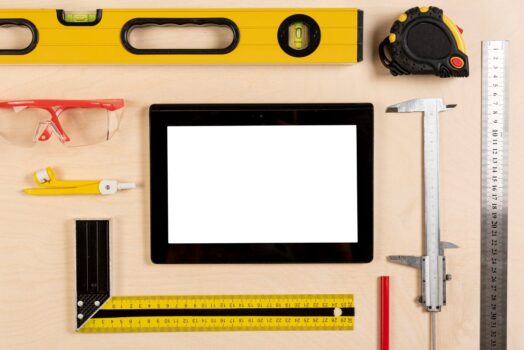
Imagine spending an entire Saturday building a beautiful set of shelves.
The cuts are clean.
The screws are perfectly tightened.
Disclaimer:
Our recommendations are based on extensive experience with and/or knowledge of these products, and we do so not because of the modest commissions we could earn but rather because we believe they are actually beneficial and useful. We are honored to be these tools' affiliates. We might receive commissions from Amazon, and other merchants when you buy something after clicking one of our links. Our affiliate policy is covered in more detail here. If you don't think these things will help you accomplish your goals, please don't spend any money on them.
Everything fits together exactly as planned.
Until you hold the finished shelf against the wall.
It’s 20 millimeters too wide.
Nothing is broken.
Nothing was assembled incorrectly.
The measurements were simply wrong.
It’s a frustrating lesson, but one every DIYer learns sooner or later:
Most projects don’t fail because of poor workmanship.
They fail because of poor measurements.
That’s why experienced DIYers often spend more time measuring than cutting, drilling, or fastening.
It may not look exciting.
Nobody buys a tape measure and rushes home to admire it.
But measuring tools quietly prevent mistakes that no hammer, screwdriver, or wrench can fix afterward.
The good news is that you don’t need a workshop full of expensive equipment.
A handful of reliable measuring tools can help you:
- Hang shelves straight
- Build furniture accurately
- Install cabinets correctly
- Cut materials with confidence
- Reduce wasted time and materials
More importantly, they help you avoid that sinking feeling when you realize a perfectly good piece of wood is now permanently… 20 millimeters too short.
Because in DIY, cutting something twice is impossible.
Measuring twice, however, is completely free.
And it remains one of the smartest habits any homeowner can develop.
The Most Essential Measuring Tools Every Homeowner Should Know
Walk through the measuring aisle of a hardware store and you might think NASA has started making DIY equipment.
Laser measures.
Digital angle finders.
Calipers.
Marking gauges.
Contour gauges.
Stud finders.
Moisture meters.
It’s easy to believe you need all of them.
You don’t.
Most homeowners can complete years of successful DIY projects with a surprisingly small collection of measuring tools.
The trick isn’t owning everything.
It’s knowing which tool answers which question.
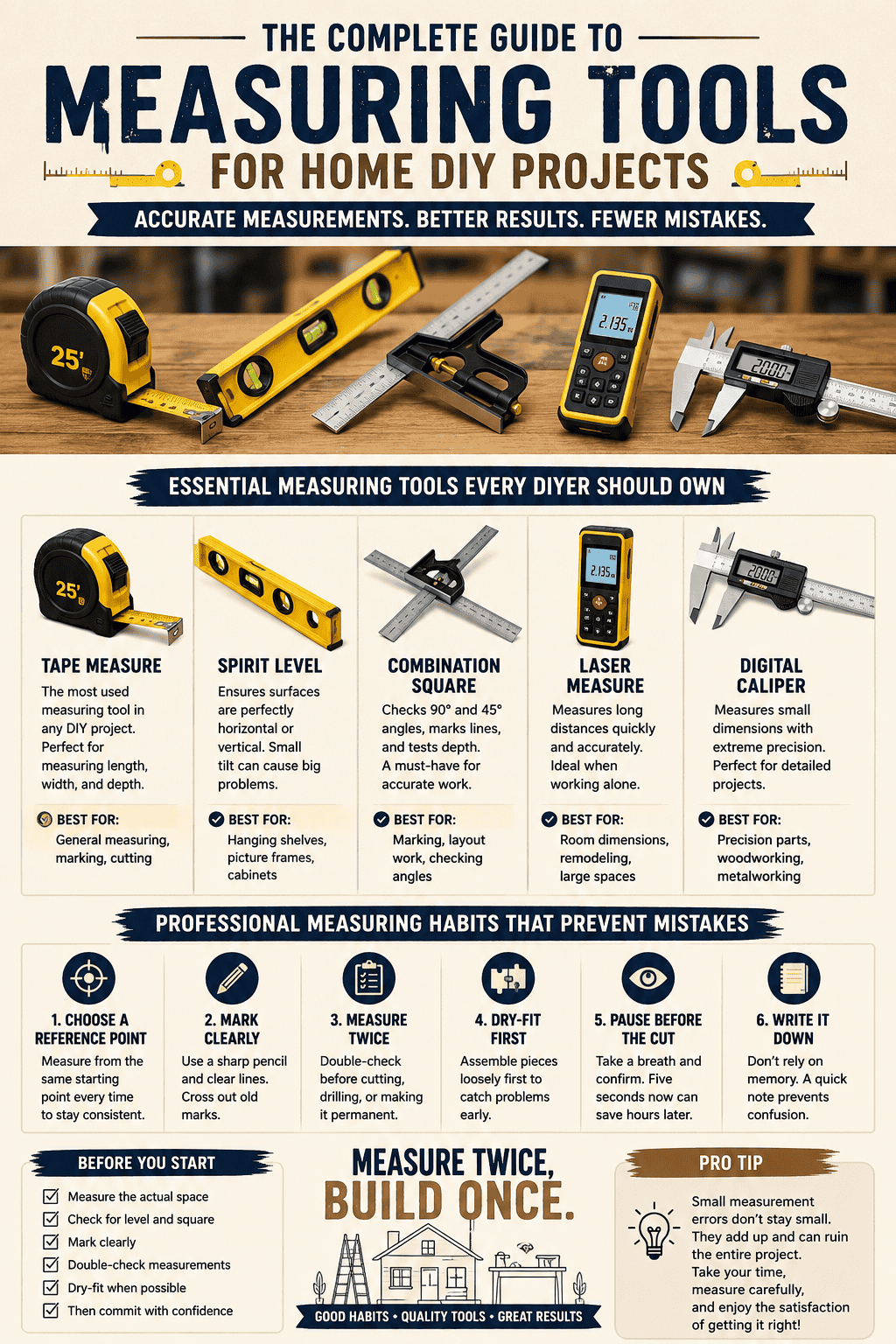
Tape Measure
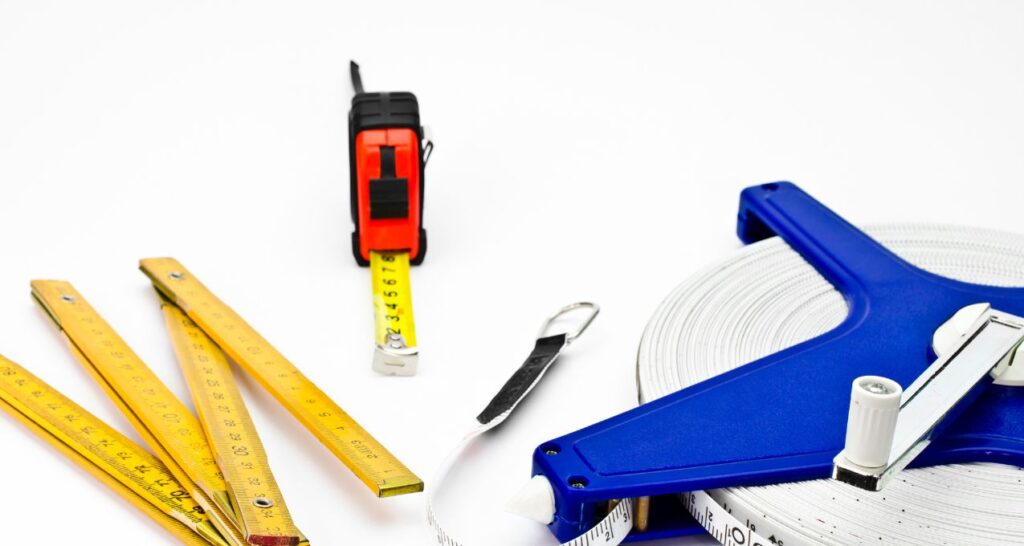
If your toolbox could only contain one measuring tool, this would be it.
A good tape measure handles hundreds of everyday jobs, including:
- Measuring rooms
- Hanging pictures
- Planning furniture layouts
- Cutting timber
- Installing shelves
- Checking appliance dimensions
Choose one that’s easy to read, locks firmly, and has a sturdy blade that won’t fold every time you extend it.
You’ll use it far more often than you think.
Spirit Level
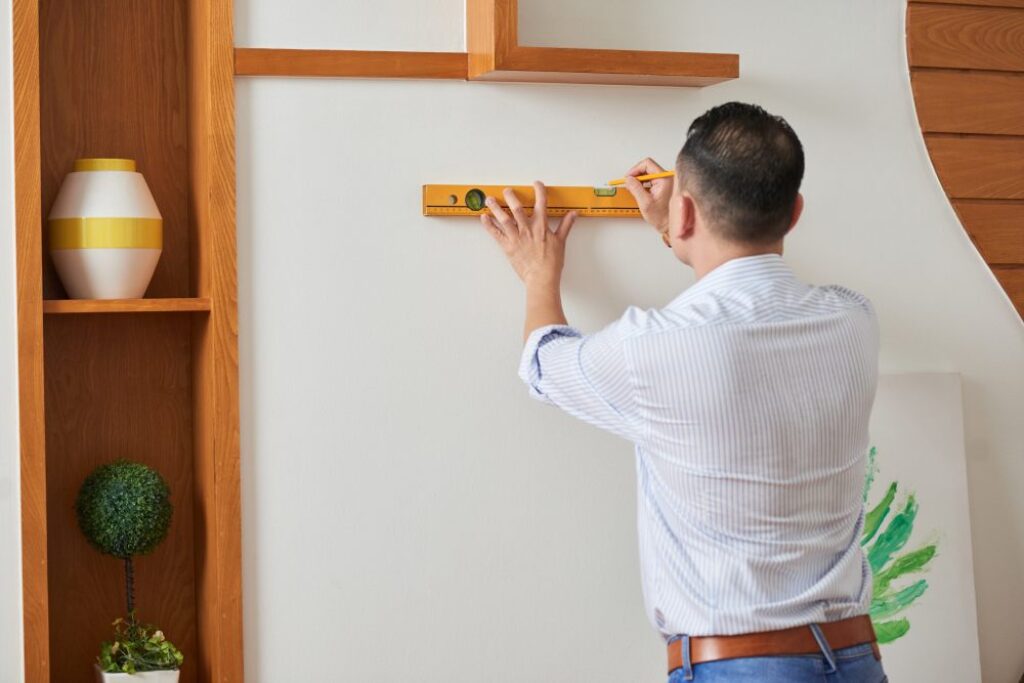
Measuring isn’t only about distance.
Sometimes it’s about gravity.
A shelf can be exactly the right length and still look terrible if it’s tilted.
A spirit level helps you ensure that shelves, cabinets, mirrors, TVs, curtain rails, and pictures all sit exactly where they should.
Because nothing attracts attention faster than something that’s almost straight.
And once you notice it…
You’ll never stop noticing it.
Combination Square
This might be one of the most underrated tools in any workshop.
At first glance it looks simple.
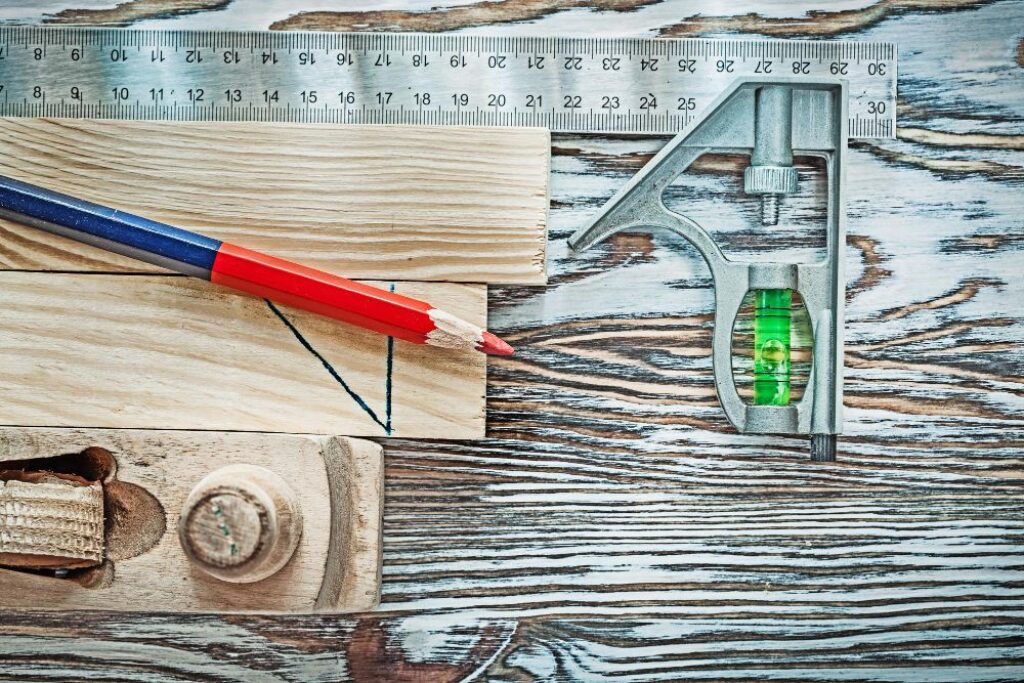
In reality it can:
- Check 90° angles
- Mark perfectly straight lines
- Measure small distances
- Verify depth
- Help transfer measurements accurately
It’s one of those tools that quietly improves the quality of almost every woodworking project.
Laser Measure
If you’ve ever measured a room while balancing one end of a tape measure with your foot…
…you’ll immediately understand the appeal of a laser measure.
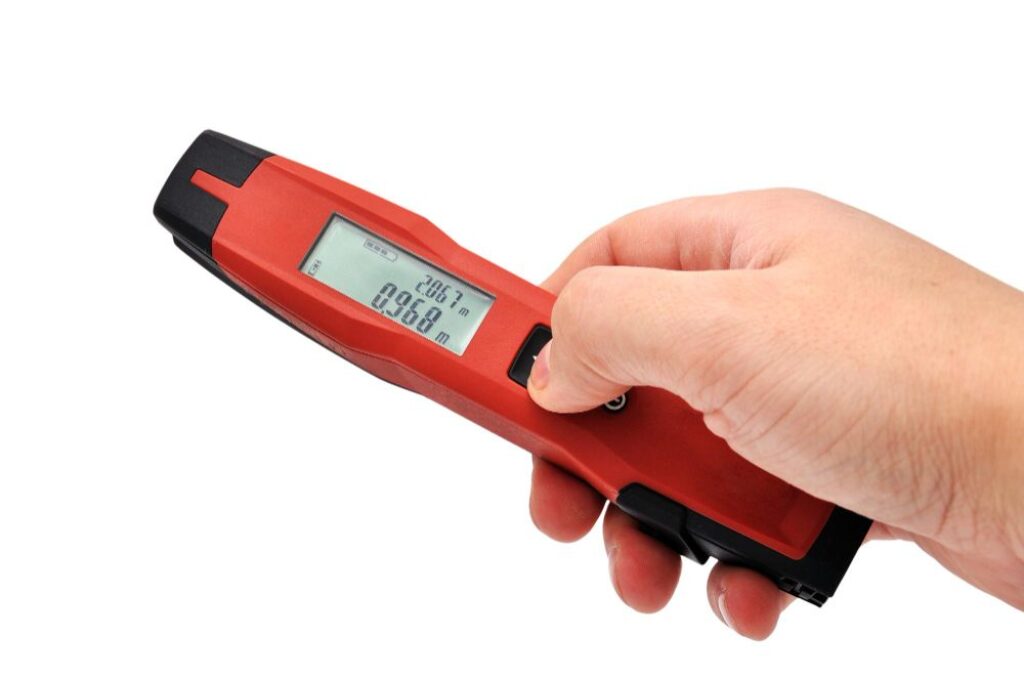
With the press of a button, you can quickly measure:
- Room dimensions
- Ceiling height
- Flooring areas
- Wall lengths
They’re especially useful when working alone or measuring larger spaces.
For quick renovations, they can save a surprising amount of time.
Stud Finder
Here’s a lesson many homeowners learn the hard way.
Drywall isn’t particularly good at holding heavy shelves.
Or televisions.
Or large mirrors.
A stud finder helps locate the wooden framing hidden behind the wall so your screws actually have something solid to grip.
It’s one of those inexpensive tools that can prevent expensive repairs later.
Digital Caliper
Most homeowners won’t need one every weekend.
But when precision matters, few tools compare.
Digital calipers are ideal for:
- Measuring bolts
- Drill bits
- Pipe diameters
- Small hardware
- Replacement parts
Sometimes the difference between 10 mm and 12 mm determines whether a repair succeeds or sends you back to the hardware store.
Which Measuring Tools Should You Buy First?
If you’re building your first DIY toolkit, keep it simple.
I’d start with:
- Tape measure
- Spirit level
- Combination square
- Stud finder
Those four tools will support the vast majority of household projects.
Everything else can be added naturally as your projects become more ambitious.
Just like every toolbox we’ve built throughout this series, the smartest collections aren’t the biggest.
They’re the ones that solve today’s problems while quietly preparing you for tomorrow’s.
The Most Expensive Five Seconds in DIY
You’ve probably heard the saying:
“Measure twice, cut once.”
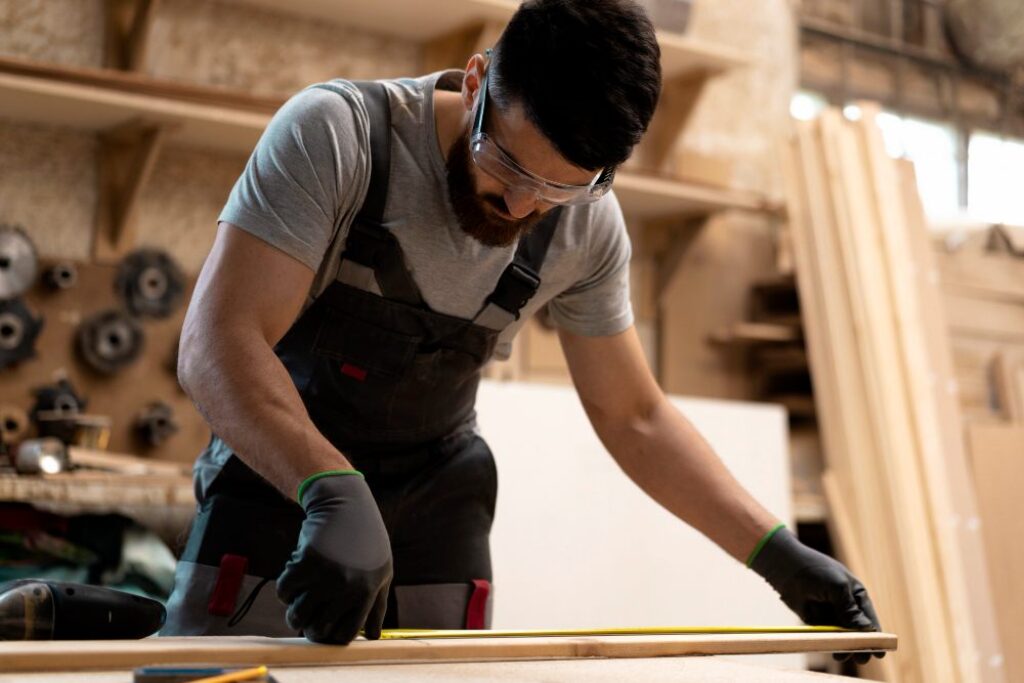
It’s repeated so often that many people stop thinking about what it actually means.
Here’s the interesting part.
Professional carpenters still follow it.
Not because they don’t trust their skills.
Because they do.
Experience teaches them that confidence is never a substitute for verification.
Think about it.
Measuring a board again takes five seconds.
Buying another board might take an hour.
Driving back to the hardware store might take two.
Rebuilding an entire project because one measurement was wrong?
That can cost an entire weekend.
The Human Brain Loves Assumptions
One reason measurement mistakes happen has nothing to do with tape measures.
It’s psychology.
Our brains love finishing sentences.
We glance at a measurement and think,
“Yeah… that’s about right.”
Or we remember yesterday’s measurement instead of today’s.
Or we assume two pieces are identical because they look identical.
Unfortunately, wood, walls, floors, and old houses don’t care what our brains assume.
They only care about reality.
Measure the Space—Not the Plan
Here’s a mistake that catches even experienced DIYers.
You carefully measure one side of a room.
Then you assume the opposite side is exactly the same.
Older homes smile politely at that assumption.
Walls bow.
Corners drift.
Floors settle.
Very few rooms are perfectly square.
Whenever possible, measure where the material is actually going—not where you think it should fit.
The Pencil Mark That Lied
Imagine marking a board.
You set it down.
Move it.
Answer your phone.
Come back ten minutes later.
Now there are three pencil marks.
Which one was correct?
It sounds almost ridiculous.
Until it happens.
Many professionals develop simple habits like crossing out old marks or making a final cut line more obvious.
Not because they have poor memories.
Because they know distractions are part of every project.
Five Seconds vs Five Hours
One of the best habits you can develop is this:
Before making any irreversible cut, stop.
Look at the measurement one more time.
Ask yourself one simple question:
“If this cut is wrong, what happens next?”
If the answer is,
“I’ll need another piece of wood.”
Those five extra seconds suddenly feel like an excellent investment.
Why Professionals Still Pause
Watch an experienced carpenter work.
You’ll notice something interesting.
They don’t rush the important moments.
Right before drilling.
Right before cutting.
Right before mounting a cabinet.
There’s often a brief pause.
Not because they’re uncertain.
Because that’s the moment mistakes become permanent.
The measurement isn’t the slow part of the project.
Fixing the wrong measurement is.
And that’s why “Measure twice, cut once” has survived for generations.
Not because it’s clever.
Because it keeps proving itself right.
Small Measurement Errors Become Big Problems
One millimeter doesn’t sound like much.
Until it happens eight times.
One of the biggest surprises for new DIYers is discovering that tiny measurement errors don’t stay tiny.
They accumulate.
Imagine you’re building a simple bookshelf.
Each shelf is only 2 mm shorter than planned.
It hardly seems worth worrying about.
But by the time you’ve assembled the entire unit, those small differences begin showing up everywhere.
The shelves don’t align perfectly.
The frame feels slightly twisted.
The back panel refuses to sit flush.
Nothing looks dramatically wrong.
It just doesn’t look… right.
The Domino Effect
Measurements behave a little like dominoes.
The first one falls.
Then the next.
Then the next.
A small error while marking the first board becomes a larger error during assembly.
That assembly error becomes an alignment problem.
The alignment problem forces you to “adjust” the next piece.
Before long, you’re solving problems that never needed to exist.
The House Is Probably Not Perfect
Here’s another lesson that surprises many homeowners.
Your house probably isn’t perfectly square.
Neither is mine.
Doors settle.
Walls shift.
Floors move over the years.
That’s completely normal.
Professional installers expect this.
Instead of assuming every corner is exactly 90 degrees, they measure the actual space before making critical cuts.
The plan is only the starting point.
The room always gets the final vote.
Accuracy Is More Important Than Speed
When people rush, they often save thirty seconds at the beginning…
…and lose thirty minutes at the end.
Taking one extra measurement before drilling a wall or cutting expensive material feels slow.
Until you compare it with:
- Filling unnecessary holes.
- Buying replacement materials.
- Starting the project again.
Suddenly, careful measuring becomes the fastest part of the entire job.
Progress, Not Perfection
Here’s something worth remembering.
The goal isn’t to measure perfectly every single time.
The goal is to catch small mistakes before they become expensive ones.
Every experienced DIYer has made measurement errors.
The difference is that they build habits that catch those errors early.
Because perfection is unrealistic.
Checking your work is not.
And in DIY, that’s often the habit that separates a satisfying weekend project from one that ends with an unexpected trip back to the hardware store.
Measuring Habits Professionals Use
Watch an experienced carpenter, cabinet installer, or remodeler at work.
You’ll notice something interesting.
They aren’t necessarily faster than beginners.
In fact, they often seem slower.
At least until the project comes together.
That’s because they’re constantly checking small details that most people never notice.
Those little habits rarely make exciting YouTube thumbnails.
But they’re often the reason professional work looks… professional.
Measure From the Same Reference Point
One of the easiest ways to introduce small errors is to measure from different starting points.
Imagine installing several shelves.
The first measurement starts from the floor.
The second starts from the previous shelf.
The third starts from a pencil mark.
Each measurement might be correct on its own.
Together?
Not necessarily.
Professionals usually choose one reliable reference point and stick with it for the entire project.
Consistency often matters just as much as accuracy.
Trust the Tape—Not Your Memory
It’s surprisingly easy to convince yourself you’ll remember a measurement.
You won’t.
Or at least, not for long.
Walk across the workshop.
Answer a phone call.
Help someone for thirty seconds.
Suddenly you’re wondering,
“Was that 684… or 648?”
Good DIYers don’t rely on memory.
They write measurements down.
Every time.
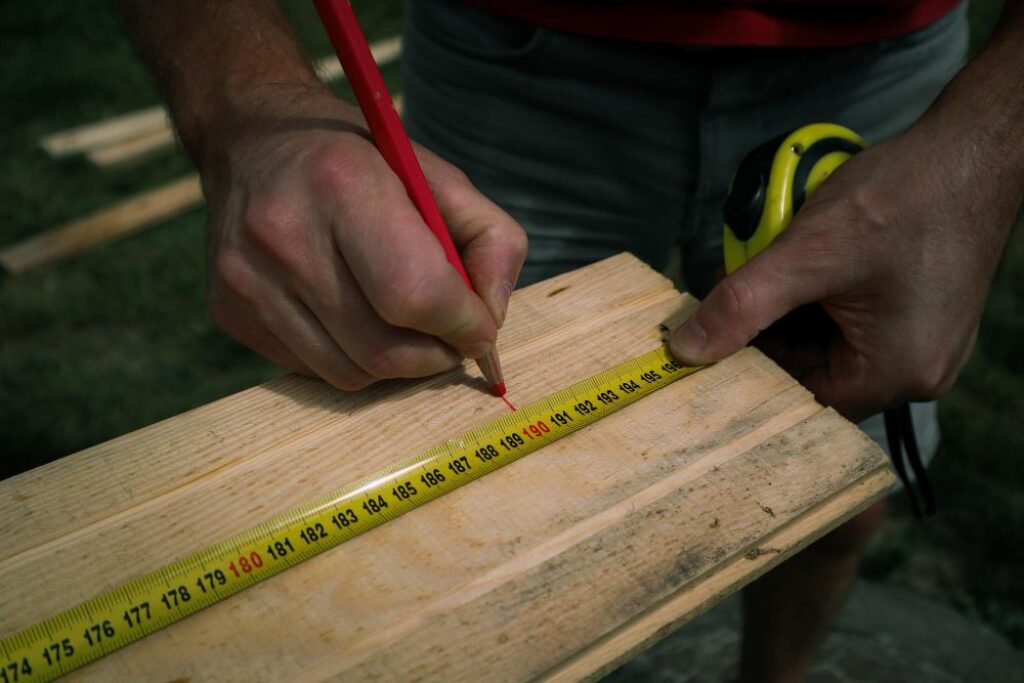
Mark Clearly
A pencil mark is only useful if you can still recognize it five minutes later.
Many experienced DIYers develop simple habits such as:
- Crossing out old marks
- Using arrows to indicate the waste side of a cut
- Drawing a clear cut line instead of a tiny tick mark
It sounds like a small detail.
Until you’re standing in front of an expensive board wondering which side of the line was the correct one.
Dry-Fit Before Making It Permanent
This habit saves countless mistakes.
Before tightening every screw…
Before applying glue…
Before driving the final nail…
Assemble the parts loosely first.
A quick test fit often reveals problems while they’re still easy to fix.
Once everything lines up correctly, you can finish with confidence.
Slow Down at the Point of No Return
There’s a moment in every project where the decision becomes permanent.
The saw touches the wood.
The drill meets the wall.
The first hole is made.
Professionals almost always pause here.
Not because they’re uncertain.
Because they understand something beginners often discover the hard way:
There are mistakes you can adjust.
And there are mistakes you can only replace.
Learning to recognize that moment is one of the most valuable skills any DIYer can develop.
Good Results Come From Good Habits
People often assume professionals achieve better results because they own better tools.
Sometimes that’s true.
More often, it’s because they repeat the same reliable habits on every project.
Measure carefully.
Mark clearly.
Check again.
Then commit.
It isn’t glamorous.
It isn’t complicated.
But over hundreds of projects, those small habits quietly become outstanding workmanship.
When You Need More Than a Tape Measure
A tape measure is one of the most useful tools you’ll ever own.
It’s also one of the easiest tools to overestimate.
Many DIY mistakes happen because someone measured correctly…
…but measured the wrong thing.
Or measured only one part of the project.
Or forgot that measuring is only one piece of the puzzle.
Sometimes the smartest decision isn’t taking another measurement.
It’s reaching for another tool.
When “Straight Enough” Isn’t Actually Straight
A tape measure can tell you a shelf is exactly 900 mm long.
It can’t tell you whether it’s level.
That’s the spirit level’s job.
Many first-time DIYers proudly step back after mounting a shelf…
Only to discover that everything placed on it looks like it’s preparing for a slow-motion escape.
Length and level are two completely different measurements.
Both matter.
When the Wall Has a Secret
You’ve measured carefully.
Marked the perfect position.
Everything is ready.
Then the drill suddenly finds…
…nothing.
Just hollow drywall.
This is where measuring gives way to locating.
A stud finder reveals what a tape measure never can:
What’s hiding behind the wall.
For heavy shelves, TVs, mirrors, and cabinets, that information can be far more valuable than the measurement itself.
When the Room Doesn’t Follow the Rules
On paper, the room is perfectly square.
Reality has other ideas.
Older houses are full of small surprises.
Walls lean slightly.
Corners drift.
Floors settle over time.
This is why experienced installers don’t simply measure one wall and assume the opposite side matches.
They measure the actual installation area.
Sometimes twice.
Sometimes three times.
Because houses have a wonderful habit of ignoring blueprints written twenty years ago.
When Precision Becomes Critical
Imagine replacing a wheel on your bicycle.
Buying a new bearing.
Matching a bolt.
Measuring a pipe.
A tape measure isn’t designed for that level of precision.
That’s where tools like digital calipers become invaluable.
Sometimes the difference between success and another trip to the hardware store is only a single millimeter.
The Best Measuring Tool Isn’t Always a Measuring Tool
This might sound strange.
But sometimes the most accurate measuring tool is…
…the object itself.
Professional installers often use existing parts as templates.
Woodworkers transfer dimensions directly from one piece to another.
Cabinet makers avoid unnecessary calculations whenever possible.
Why?
Because every time you convert a measurement, mark a line, or read a scale, there’s another opportunity for a small error to creep in.
Whenever you can safely transfer a measurement directly, you remove an entire step from the process.
And fewer steps usually mean fewer mistakes.
The Goal Was Never Perfect Measurements
The goal has always been confidence.
Confidence that the shelf will fit.
Confidence that the cabinet door will close.
Confidence that the expensive piece of hardwood is about to be cut in exactly the right place.
Measuring tools don’t guarantee perfect projects.
They simply remove as much uncertainty as possible.
And in DIY, reducing uncertainty is often the biggest advantage you can give yourself before the real work even begins.
Frequently Asked Questions
What is the most important measuring tool for homeowners?
If you only buy one, make it a quality tape measure.
It’s useful for everything from planning furniture layouts and hanging shelves to buying appliances and cutting materials.
As your DIY projects become more ambitious, adding a spirit level and combination square will greatly improve your accuracy.
Why do professionals measure twice?
Because mistakes become permanent surprisingly quickly.
Taking five extra seconds to confirm a measurement is almost always faster—and cheaper—than replacing materials or rebuilding part of a project.
It’s not about lacking confidence.
It’s about avoiding unnecessary surprises.
Are laser measures more accurate than tape measures?
Not necessarily.
Both can be extremely accurate when used correctly.
Laser measures excel at quickly measuring larger spaces, especially when working alone.
Tape measures remain the better choice for marking cuts, measuring lumber, and many everyday DIY tasks.
Most experienced DIYers use both depending on the situation.
Do I really need a spirit level?
If you’re hanging anything on a wall, the answer is almost certainly yes.
Even a small tilt becomes surprisingly noticeable once a shelf, picture frame, or TV is installed.
A spirit level helps ensure your finished project looks as good as it functions.
Why don’t measurements match my house plans?
Because houses change over time.
Walls shift slightly.
Floors settle.
Corners are rarely perfectly square.
That’s why professionals measure the actual installation area instead of relying solely on drawings or previous measurements.
What’s the biggest measuring mistake beginners make?
Rushing.
Not because they don’t know how to use a tape measure.
Because they stop checking.
Most measurement mistakes happen when someone assumes,
“That should be close enough.”
Unfortunately, building materials have very little appreciation for “close enough.”
Should I write measurements down?
Absolutely.
Memory is surprisingly unreliable during a project.
A simple notebook, a piece of masking tape, or even your phone can prevent confusion later.
Experienced DIYers rarely trust memory when a quick note will do.
Is expensive measuring equipment worth buying?
Usually not at the beginning.
Start with reliable basics.
As your projects become more demanding, you’ll naturally discover when tools like laser measures, digital calipers, or angle finders become worthwhile investments.
Your projects should decide when it’s time to upgrade—not clever marketing.
Final Thoughts
There’s an old saying in woodworking:
“Wood is expensive because mistakes are expensive.”
The same idea applies to almost every DIY project.
Most repairs don’t become difficult because the tools are complicated.
They become difficult because one small measurement quietly sent the project in the wrong direction.
The encouraging part is that measuring is one of the easiest skills to improve.
Not through expensive equipment.
Not through years of experience.
But through simple habits.
Pause.
Check.
Measure again.
Write it down.
Verify before making the cut.
Those habits don’t just produce straighter shelves or better-fitting cabinets.
They build confidence.
And confidence changes the way you approach every future project.
Years from now, you probably won’t remember the exact tape measure you owned.
But you’ll remember the projects that fit perfectly the first time.
And chances are, they started with a careful measurement rather than a lucky guess.
Because good DIY isn’t about making fewer cuts.
It’s about making the right ones.